
 Tutorials


 Ahura
Ahura Plugins

 Blog
Blog9 SEO Standards You Must Follow

Let’s start with a simple question. The last time you wanted to buy something, what was the first thing you did? Chances are you headed straight to Google and searched for it. From booking a plane ticket to buying a pair of shoes, almost everything these days starts with a simple search.
Now here’s the interesting part: most of us find our answer right there on the first page of Google’s results and never bother going to the second or third page. Which means if your site isn’t on the first page, it might as well not exist at all.
And that’s exactly where SEO comes into play. In this article, I want to introduce you to 9 of the most important SEO standards — the very things that, when you follow them, help increase your site’s traffic from Google. So stick with me till the end.
Table of Contents
What Is SEO and Why Does It Matter for Businesses?
SEO means optimizing your site for search engines. In simple terms, we do things that make search engines like Google notice our site and — if we’ve done our job right — show it high up in the results.
Google decides where you rank based on the credibility your site builds over time. In other words, if you have SEO-friendly, user-friendly content, you’ll gradually climb into those top links. And that’s exactly where you’ll see the impact of SEO on your business with your own eyes.
Really, the main goal of SEO is one thing: helping you get seen and attract customers. The more a business gets seen and the better it ranks, the more traffic it gets — and more traffic means more customers and higher revenue. On top of that, being in the top results also earns the user’s trust. So don’t just brush past it.
9 SEO Standards You Should Follow
Now we get to the main part. I’ve laid out these 9 items so you can implement them on your own site one by one.
Producing attractive, high-quality content
Unique, one-of-a-kind content is one of the most important things that boosts your SEO. This content can be text, video, image, or even audio and podcasts — it doesn’t matter; what matters is that it’s high quality.
Why does it matter? Because good content makes users stay on your site longer and interact with it. Google picks up on that interaction and factors it in as a positive point in its ranking.
How do we do it? Follow a few tips:
- Pick an attractive title that entices the user to read.
- Keep your content purposeful; in the end it should give the user a specific product, service, or lesson.
- Use high-quality images and video.
- Make your delivery clear and smooth, with a coherent beginning and end.
- And don’t forget a dash of creativity. For example, try to make your titles a little unusual and distinctive, while still being relevant to the content.
Choosing the right keywords
Keywords are the words or phrases that users search for on Google.
Why does it matter? Because these words are like a signpost that guides your target audience straight to your site.
How do we do it? First, figure out your target audience, then put yourself in the user’s shoes. If you were them, what would you search for? Make a list of these guessed-at words, and then go after the ones that actually get searched more. Tools like Google Trends also help you see which word gets searched more. Sure, this takes a bit of time, but it’s definitely worth it. So put in the time for it.
Optimizing your site’s pages (on-page SEO)
Optimizing your pages means organizing the content and structure of each page.
Why does it matter? Because both the user reads the text more easily, and Google understands the page better.
How do we do it? By following a few simple tips:
- Use short phrases and paragraphs.
- Get your writing right and put punctuation marks in their proper place.
- Distribute keywords naturally throughout the text.
- Use meta tags.
- Write alternative text (Alt) for your images.
Proper linking
Linking comes in two kinds: internal links (between the pages of your own site) and external links (linking to other sites or getting links from them).
Why does it matter? Search engines care a lot about links, and proper linking has a significant impact on your site’s SEO.
How do we do it? Don’t place links randomly and pointlessly. Each link should align with your page’s topic and keywords so that it really helps the user (and Google).
Writing effective meta descriptions
The meta description is that gray-colored text you see in Google’s results, right below the main title.
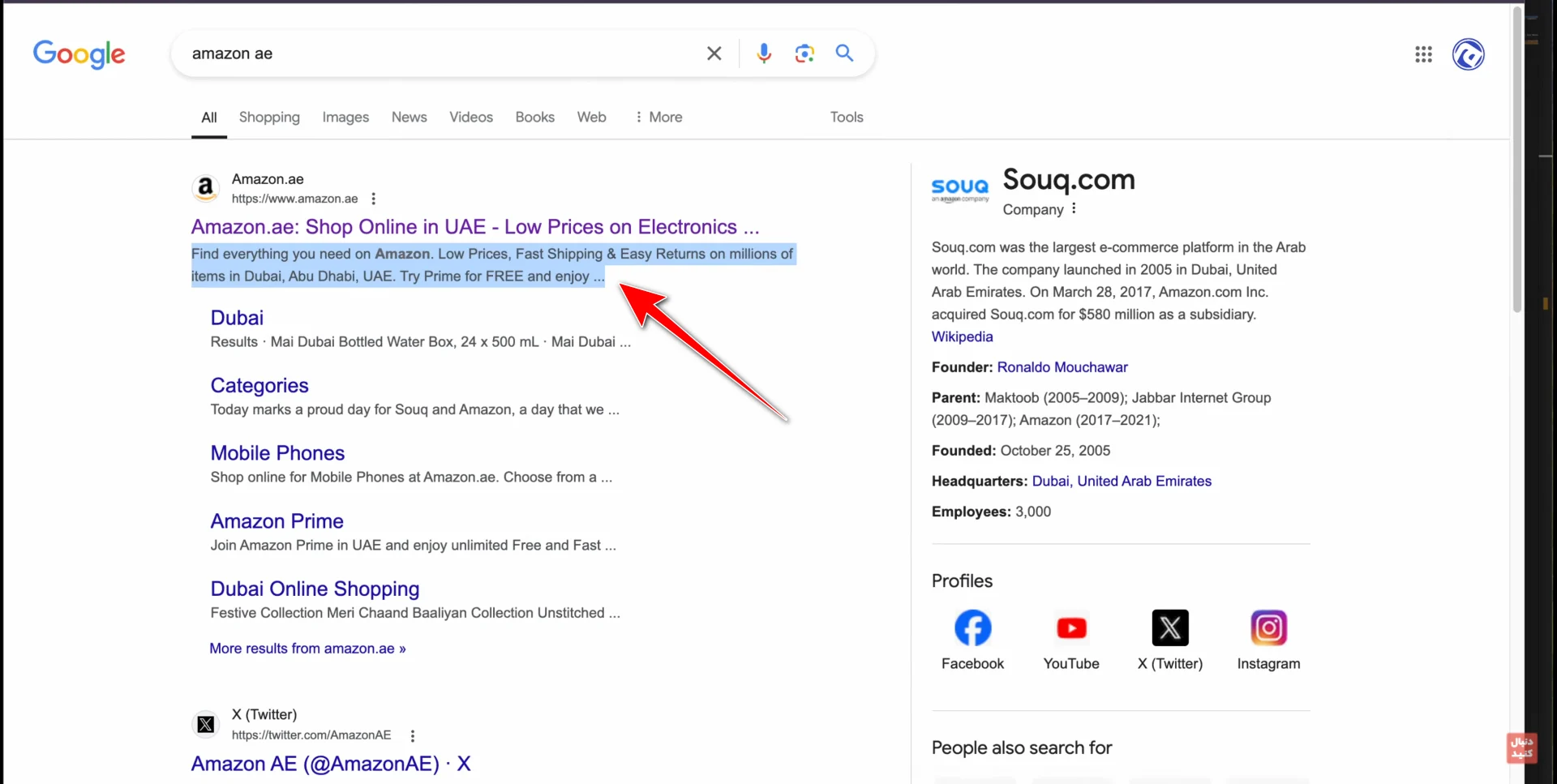
Why does it matter? Because these few lines determine whether the user clicks on your link or not.
How do we do it? Write it in a way that makes the user curious and want to click. Of course, keep in mind that after the click, it’s your high-quality content that has to keep the user on the site.
Introducing your site with a Sitemap
A sitemap is a file that introduces all of your site’s pages to Google.
Why does it matter? Because it helps Google index your pages faster and more completely, and show them in relevant results.
How do we do it? Register your sitemap in Google Search Console. After that, Search Console indexes your site and adds you to relevant search results.
Improving site speed
Site speed means how fast your pages load.
Why does it matter? The stats say a user expects a site to load in under three seconds. If those three seconds turn into four or five, you’ll easily lose your user — even if you have the best content and product in the world.
How do we do it? Optimize your images, keep your site lightweight, and treat load speed as one of the serious SEO factors.
Being mobile-friendly
Mobile-friendly means your site displays properly and neatly on mobile and tablet too. This is also called responsive design.
Why does it matter? Because these days most users get online with their phones, and Google gives special importance to the mobile version of sites.
How do we do it? Use a responsive template. In this setup, when a user enters the site with a phone, tablet, or computer, the site adapts its dimensions to their screen. This is one of the most important SEO standards, so take it seriously.
Proper, user-friendly site design
One of the important factors for attracting users is a simple yet beautiful design.
Why does it matter? Because no user will tolerate a cluttered, messy site for more than a few seconds. The visual aspects, easy access to menus and pages, and how easy the site is to work with all affect SEO.
How do we do it? Work on the user experience; keep the site clean and understandable, and stay away from cluttered, messy templates.
The Benefits of SEO for Your Business
Alright, now that you’re familiar with the 9 standards, let’s see what following them actually gains you for your business:
- More visibility: Being present in Google’s top results alone raises your site’s views and traffic.
- More credibility and trust: When you’re at the top of the results, the audience trusts you more easily.
- Help with branding: SEO helps your business name gradually turn into a brand.
- Lower advertising costs: The cost of SEO is much lower compared to TV or billboard advertising, and its results are more lasting too.
- Increased sales: Since most people research online before buying, SEO can bring them straight to your site and boost the chances of a sale.
- Visibility on social media: SEO also helps your business get known in the social space.
- Turning visitors into customers: SEO doesn’t just bring views; with the right techniques, it turns a visitor into a real customer.
Is SEO the Same as Internet Marketing?
Short answer: no. SEO is just one of the subcategories of internet marketing. Other tools like social networks, email marketing, and social media are just as effective as SEO in online businesses.
The reality is that when you start an online business, you come face to face with thousands of competitors just like yourself. To win in this competition, you need to do internet marketing, and SEO is one of the most powerful tools on this path. Alongside it, be sure to analyze your competitors too; learn from their strengths and use their weaknesses for your own progress.
Wrapping Up
By now you’ve probably got a good grasp of the role SEO plays in businesses. Today the competition between online businesses has gotten really fierce, and almost every business, whether small or large, has a site of its own.
In this highly competitive space, the one who’s more successful is the one who moves forward alongside technology and puts time and money into their business. Your site’s SEO, alongside the other internet marketing methods, can be the very thing that puts you one step ahead of your competitors. Wishing you success. 🙂

Ahura WordPress Theme
The Power to Change EverythingElementor Page Builder
The most powerful WordPress page builder with 100+ exclusive custom elements.
Incredible Performance
With Ahura’s smart modular loading technology, files load only when they are truly needed.
SEO Optimized for Google
Every line of code is carefully aligned with Google’s algorithms and best practices.

To post a comment, please register or log in first.