
 Tutorials


 Ahura
Ahura Plugins

 Blog
BlogThe Impact of Content Quality on SEO: A Complete Guide to Ranking
- Tutorials
- Updated on

Let me talk to you plainly and without sugarcoating: SEO is no longer that old game of “the more keywords you cram into the text, the better.” That era is over! Today Google processes billions of searches a day, and for a lot of them, instead of a simple list of links, it shows you an AI summary at the top of the page. In this new world, one thing and one thing only either saves your site or sinks it: content quality. A few years ago content was “one of” the important factors, but now I can say with confidence that it’s the most important factor.
In this article, we’re going to look — very simply and casually — at what the impact of content quality on SEO actually is, what kind of content Google considers “high quality” in 2025 and 2026, and how you, as the owner of a WordPress site or a content creator, can write something that ranks, gets seen in AI summaries, and in the end reaches real sales and revenue. So let’s get started!
By the way, SEO is a subcategory of digital marketing. If you’re new to this field, I’d suggest you first take a look at the free SEO course and then come to this article with peace of mind.
Table of Contents
Why Has Content Quality Become More Important Than Ever?
There was a time on the internet when sites would write content so that one particular keyword got repeated over and over, relentlessly, throughout the text and the tags. And for a while it worked. But Google’s crawlers have gotten smarter by the day, and now they not only understand what your page’s topic is, they can tell whether this content is actually useful to the user or just written to trick the search engine.
The turning point in this story was a system called Helpful Content, which Google launched back in 2022 and which has now become a permanent part of its core algorithm. Let me tell you an important (and, honestly, slightly scary) thing about it: this system measures quality across your entire site, not just a single page. Meaning if a big chunk of your site is full of shallow, SEO-stuffed content, even your good pages get hurt and their ranking drops. So you can’t say, “We’ve got a few great pages, the rest doesn’t matter.”
In the latest big update to this system (December 2025), Google took aim at three things worth knowing about:
- Depth versus length: Google now understands very well whether an article has truly answered the user’s question or just forcibly padded out the word count. That 2,500-word article that stretched out the answer to a 300-word question no longer earns any points.
- User behavior after the click: Sites that a user clicks on but immediately bounces back to the Google results from have taken a hit. Google’s message is clear: if the user comes and quickly flees, it means your content wasn’t useful to them.
- Expertise on one topic: Sites that had worked deeply on one specific topic grew, but “jack-of-all-trades” sites that write about everything from SEO to cooking declined.
So write for humans, not for robots.
What Does High-Quality Content Mean in Google’s Eyes in 2026?
“Quality” is a vague word, so let’s make it concrete. From today’s Google’s point of view, high-quality content means content that, after reading it, leaves the user feeling they had a satisfying experience and no longer need to go looking for the answer somewhere else. If the user has to go to the next site after reading your article, then from the algorithm’s point of view, you lost. It’s that simple.
High-quality content has these features:
- It’s relevant and accurate: It targets the user’s real question and gives correct, up-to-date information.
- It’s useful and practical: It doesn’t just explain; it tells the user what they should do now.
- It’s readable and engaging: Well-crafted content should be casual yet polished; the kind that entertains the user and makes reading it enjoyable. The more readable, the higher the quality.
- It’s unique: Rewriting your competitors’ articles no longer works. Google itself has said that content which just repeats what’s already on the web without adding anything new gets ranked lower.
Simply put, low-quality content doesn’t get seen at all. For a shot at ranking, you have to maintain quality across all the pages of your site, not just a select few.
The E-E-A-T Framework: The Beating Heart of Content Quality
If you’re going to take just one concept away from this article, let it be E-E-A-T. These letters stand for four words:
- Experience: Has the writer actually done the thing they’re writing about themselves?
- Expertise: Does the writer have knowledge and skill in this field?
- Authoritativeness: Are the site and the writer recognized as a reference in this area?
- Trustworthiness: Is the information accurate, honest, and reliable?
An important note: E-E-A-T isn’t a “direct ranking factor,” but rather a set of qualities that good content naturally displays and that Google tries to detect. But in 2026 this framework has essentially become a gatekeeper: content without clear E-E-A-T signals, no matter how technically optimized, ranks with great difficulty.
Of these four letters, “Experience” (which was added at the end of 2022) is the most important today. Why? Because AI can write text that “seems” as though an expert wrote it, but it can’t have first-hand experience. Real experience is the hardest thing to fake, and that’s exactly why it’s your biggest trump card.
So how do we strengthen this signal?
- Add a section called “Our experience” or “We tested it ourselves” to your important articles, and say exactly what you did, what result you got, and what you learned.
- Introduce the writer with a name, bio, and background (the author box).
- Cite credible sources and use real data and examples.
- For sensitive topics (health, finance, legal — the ones called YMYL) the level of trust needs to be much higher.
AI Content: Friend or Foe?
These days this is the most frequent question I get asked: “If I produce content with AI, will Google penalize me?”
My answer is clear: no — provided the content is high quality. Google’s official position is that “our focus is on the quality of the content, not how it was produced.” Google even gives useful examples of machine-generated content (like sports scores and weather forecasts).
But there’s a big “but” here. What Google really does penalize is low-quality, shallow, mass-produced content; it doesn’t matter whether a human wrote it or a machine. The data after the December 2025 update showed that sites which published only raw AI output without human editing took heavy traffic hits. In contrast, AI content that an expert has shaped, reviewed, and added real experience and perspective to works quite well.
So the golden rule is: never rely 100% on AI output. Use it as an assistant, but a human should edit the text, verify the accuracy of the information, add creativity and real experience, and make its tone more human. Especially in a crowded content space full of copied, unedited machine-written content, this “human touch” can be your biggest competitive advantage.
The New Era of Search: AI Overviews and Answer-Centricity
The biggest transformation in SEO in these past years is the rise of AI-based search. Google now shows a summary called AI Overviews above many results, and it also has a more advanced mode called AI Mode that, like a conversation, gives you the full answer right there.
This change has one important consequence: a lot of users get their answer right at the top of the page and don’t click at all. So the competition for the remaining traffic has gotten fiercer, and the only way to get seen is for your content to be cited as a credible source within that very AI summary.
So how do we raise our chances of getting seen in these summaries? This is where content quality and structure join hands:
- Write answer-first: Give the main answer to each question clearly and in a few sentences, right at the start of the section. AI loves short, complete paragraphs that answer a question fully.
- Build a clean structure: Use orderly headings (H2 and H3), lists, comparison tables, and a Q&A section so the machine can pull out the information more easily.
- Include a FAQ section: These sections have the best chance of being cited in AI answers.
- Cover it completely: Content that covers all aspects of a topic and the related sub-questions is more likely to be chosen as a source.
This new practice is called AEO, or Answer Engine Optimization; that is, making your content get cited by tools like ChatGPT, Perplexity, and Gemini. The good news is that the foundation of all of this is the same good SEO principles: quality, authority, and proper structure.
Become a Reference on One Topic (Topical Authority and Content Clusters)
One of the strongest quality signals in 2026 is topical authority. Instead of writing scattered, unrelated articles, arrange your content in clusters:
- Write a Pillar page that’s a comprehensive guide to one main topic (like this very article about content quality).
- Write several more specialized articles that each cover a sub-topic in depth (like “What is E-E-A-T,” “Producing content with AI,” “Keyword research”).
- Connect these articles to each other and to the pillar page with smart internal linking.
Internal linking is no longer just for “passing authority”; Google uses it to understand what topic your site specializes in. An orderly linking structure tells Google: “This is our comprehensive guide about such-and-such topic, and these five articles complete its details.”
The Connection Between Content Quality and Sales and Revenue
Let’s not forget that the ultimate goal of SEO isn’t empty traffic; it’s conversion. Attracting a hundred thousand visitors is only worth it when they buy from you, sign up, or do something. This is where content quality becomes decisive.
A lot of businesses look only at organic traffic and ranking, which — while interesting — doesn’t necessarily lead to revenue. Without high-quality content, a visitor comes and leaves without buying. Worse than that, if the content is truly bad, the user not only won’t come back themselves, they’ll also tell others to stay away from you.
Let me give you an encouraging piece of news too: the data shows that users who come through AI search are usually more purposeful and higher quality and have a higher conversion rate. So investing in quality has a direct effect on your wallet.
A Practical Guide: How Do We Produce High-Quality Content?
Alright, enough theory, let’s get to work. These are the practical steps for building content that both Google and your audience love.
Know your reader
Content marketing is customer-centric. Your first duty is to know what your audience is interested in, what questions they ask, and what concerns they have. From Google’s point of view, high-quality content means content that answers the reader’s real questions. So whatever it takes, give them their answers.
Speak in the reader’s own language
Instead of guessing, listen to your customers. Drop by forums, social media, and comment sections and see what words people use when they talk about your product. Use those same words in your content; this way your content automatically aligns with the phrases users type into Google. Q&A communities and discussion sites in your niche are also a good source for seeing the real questions users have.
Build content for every stage of the funnel
Write down every question a customer might ask at the various stages of decision-making, and prepare content for each one. But keep in mind a blog post isn’t a sales page; use content to answer and create interest, and then link to the sales pages. The main goal is building trust, not direct selling.
Maintain your consistency and regularity
Consistency builds trust and makes you credible. Set up a content calendar that’s realistic and that you can actually stick to. The more high-quality content you publish, the more phrases you’ll rank for.
Stay one step ahead of your competitors
Your content has to be better than what everyone else is offering. Be creative, step outside the box, and build something truly unique. Copying other brands’ strategies won’t get you anywhere.
The Technical SEO That Completes Content Quality
Even the best content in the world is useless if Google can’t read it or the user flees from a slow site. Content quality sits on top of a healthy technical foundation:
Speed and Core Web Vitals: Loading speed directly affects user experience and ranking. Enter your site’s address into a tool like GTMetrix to reveal its structural problems,

and use Google Search Console for monitoring too.
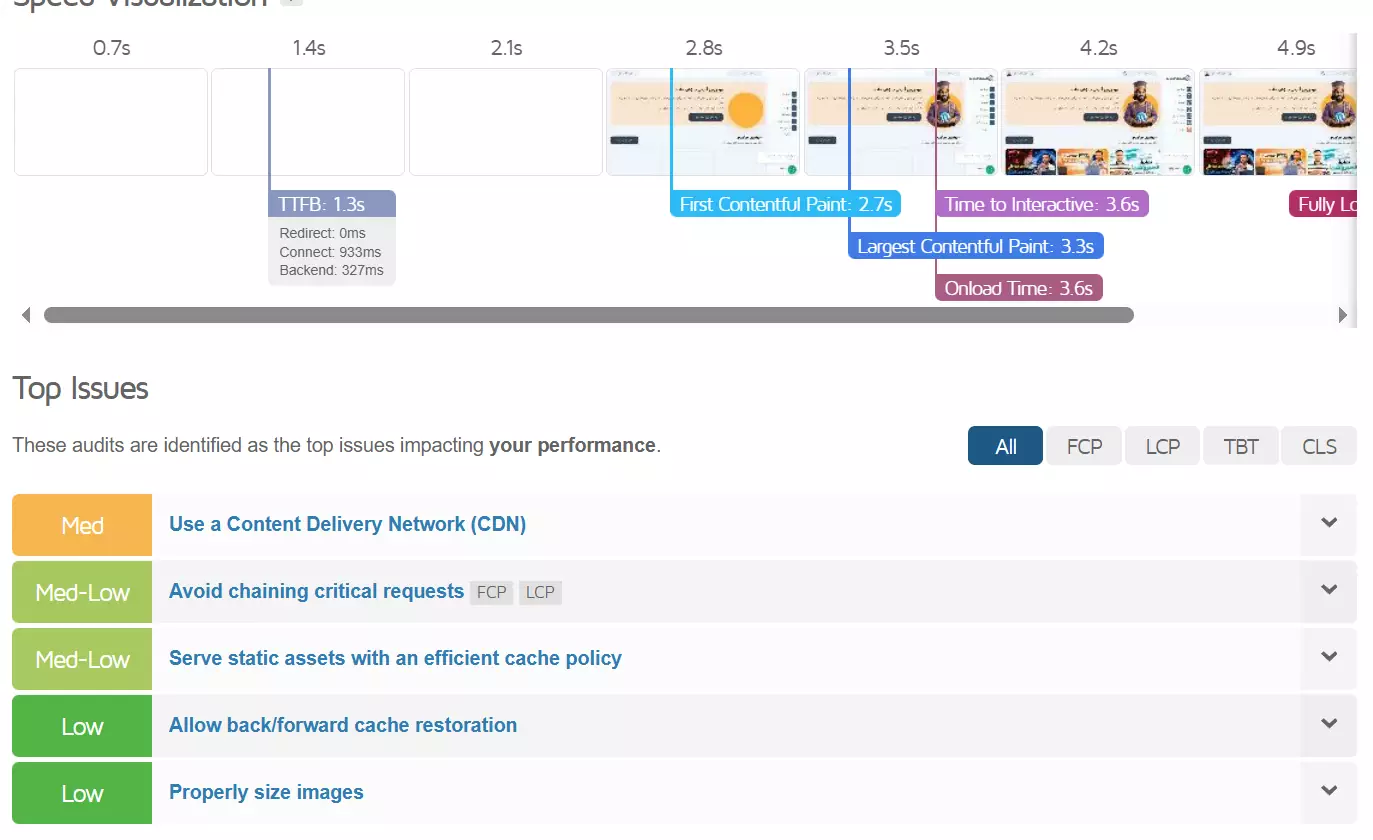
Being optimized for mobile: Google uses the mobile version of your site as its benchmark. Make sure your mobile and desktop content are identical.
Structured data (Schema): By adding Article, Q&A, and Organization schema, you help Google and AI better understand your content and credibility. Fortunately, in WordPress this is done very easily with SEO plugins.
Bot access: Make sure your content is accessible as plain HTML and that crawler bots (whether Google’s or AI bots) aren’t blocked in the robots.txt file.
Updating Old Content: One of the Most Cost-Effective Moves
One of Google’s important factors is content freshness. Google likes sites to update their articles regularly, especially on topics that change fast (and SEO is one of the fastest).
Honestly, this very thing you’re doing right now (updating this article) is one of the smartest SEO moves! Instead of writing a new article from scratch, reinforce the existing article with fresh statistics, new concepts (like E-E-A-T and AI Overviews), and up-to-date examples, deepen the weak sections, and swap out old information for today’s realities. To find pages that need updating, look in Search Console for pages ranking between 11 and 30 or that have a low click-through rate.
A Few Tips for Standing Out in a Crowded Market
Competing with low-quality content: A huge portion of the web is full of copied, unedited, machine-written content. This is a golden opportunity for you; if you produce original, experience-driven, high-quality content, you’ll shine far more easily than the competition.
A human and relatable tone: Audiences don’t connect with dry, machine-like content. That casual yet precise tone is your trump card.
Preparing for the future: AI-based search is a wave that’s on its way. Sites that build answer-centric, structured content starting now will be ahead when these capabilities fully mature.
Local and global tools: For research and analysis, you can use well-known industry tools like Ahrefs, Semrush, or Moz alongside Search Console and GTMetrix.
Wrapping Up
Let me sum up this whole article in a short list. For your content to rank in 2026, it needs to:
- Answer the user’s real question completely and answer-first.
- Have E-E-A-T signals (especially first-hand experience and a credible author).
- Be unique and human, not a rewrite of competitors or raw AI output.
- Have a clean structure with headings, lists, and a Q&A section.
- Be part of a topical cluster with orderly internal linking.
- Sit on a healthy technical foundation (speed, mobile, schema).
- Be updated regularly.
In the end, the secret of modern SEO is in one sentence: think outside the box, be creative, and build content that’s truly useful to people. If you do this, not only Google, but customers too will find you. Wishing you success. 🙂

Ahura WordPress Theme
The Power to Change EverythingElementor Page Builder
The most powerful WordPress page builder with 100+ exclusive custom elements.
Incredible Performance
With Ahura’s smart modular loading technology, files load only when they are truly needed.
SEO Optimized for Google
Every line of code is carefully aligned with Google’s algorithms and best practices.

To post a comment, please register or log in first.