
 Tutorials


 Ahura
Ahura Plugins
 Blog
BlogHow to Build a Website from Scratch?
- Web Design Course
- Updated on
Hello everyone, and a very warm welcome to the very first session of our comprehensive web design course here at Ertano. I’m genuinely excited to have you here, because today marks the beginning of something powerful. How to build a website?
If you’ve ever sat in front of your computer, scrolling through beautifully designed websites and thought to yourself, “I wish I could build something like that, but I’m not a programmer,” then this course was made exactly for you.
We are starting a journey together — a journey that will take you from absolute zero, even if you have never heard of a server or seen a line of code, all the way to launching a fully functional, professional, and high-quality website that you can proudly call your own.
Table of Contents
Do You Really Need a Website in 2026?
This is one of the most common questions I hear:
“Do I really need a website in 2026 when social media exists?”
It’s a fair question. Social media platforms are everywhere. They’re fast, easy, and give instant visibility. But here is a core belief we stand by at Ertano:
Social Media Is Rented Land
When you build your business only on social media, you are building on rented land. You don’t own the platform. You don’t control the rules. An algorithm change, an account restriction, or even a platform shutdown can instantly erase years of effort.
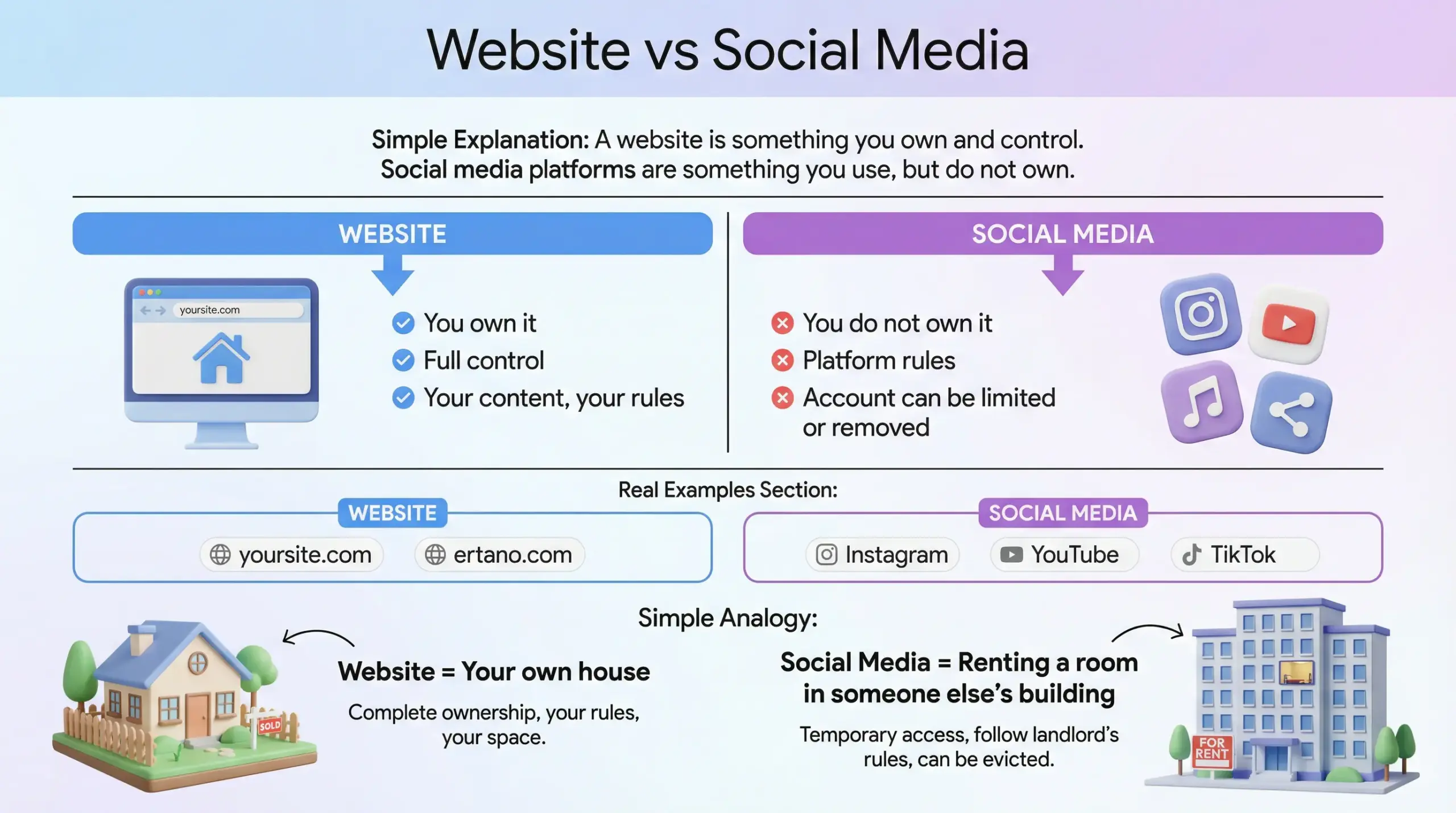
Your reach, your audience, and even your content can be limited or removed without warning.
Your Website Is Owned Land
A website is your owned digital land. It is your online headquarters. You control the content, the design, the user experience, and the direction of your brand.
Your website works for you 24/7. While you’re sleeping, eating, or spending time with family, your website is:
- Introducing your brand
- Building trust with visitors
- Explaining your services
- Collecting leads
- Making sales
No social media bio can replace that level of credibility.
How a Website Actually Works (The House Analogy)
Websites often sound technical and intimidating, but in reality, the concept is simple. I like to explain it using what I call the House Analogy.
1. Domain: Your Address
Every house needs an address so people can find it. On the internet, that address is your domain name.
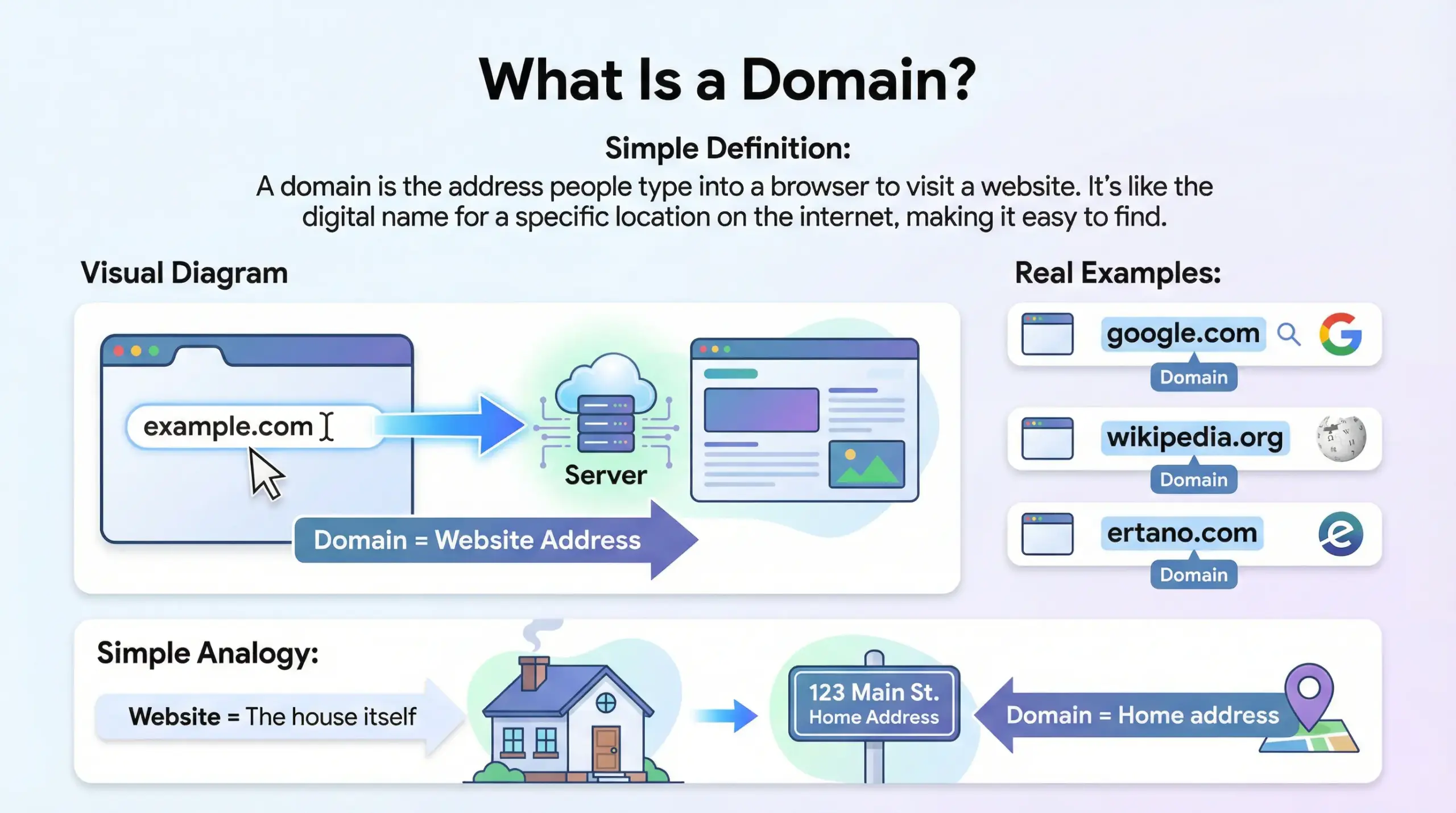
Your domain is your unique identity online, such as:
- ertano.com
- yourbusiness.com
- yourname.com
This is how people remember you and return to your website.
2. Hosting: Your Land
An address alone is not enough. You also need land to build on. In the digital world, that land is called hosting.
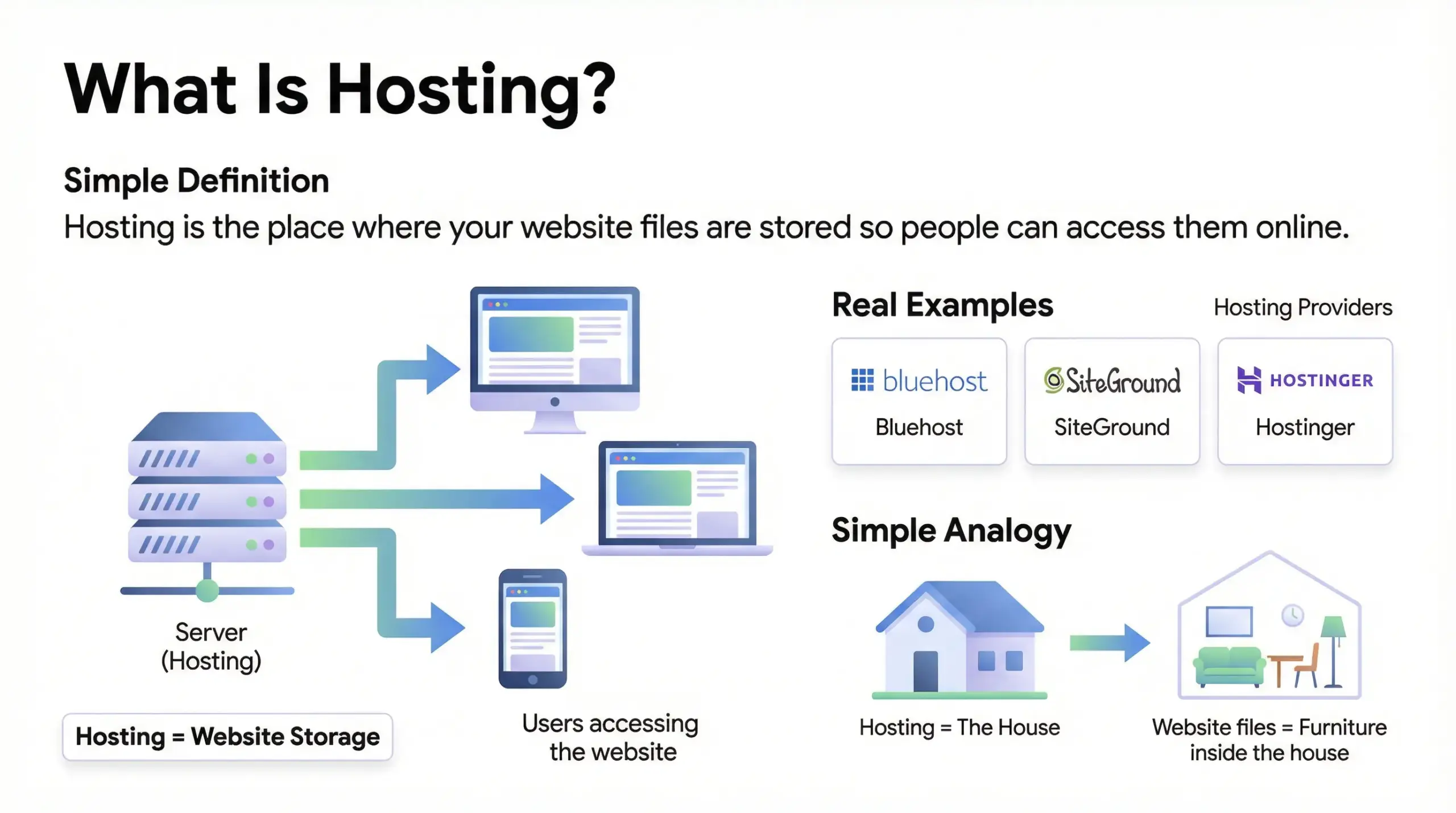
Hosting is a powerful computer that stays online 24 hours a day. It stores:
- Your website files
- Images and videos
- Text and pages
- Databases and settings
When someone types your domain into their browser, the hosting server delivers your website to them.
3. WordPress: The House Itself
Now comes the most exciting part: building the house.
WordPress is the system that allows you to create your website without coding. It is the structure, layout, and control panel that lets you design pages, publish content, and manage everything visually.
With WordPress, you don’t need to write code. You click, type, drag, and customize.
Is Building a Website Expensive?
Many people believe building a website costs thousands of dollars. That belief usually comes from hearing agency prices.
Yes, if you hire a high-end agency, they may charge a large amount. But that doesn’t mean the actual cost of a website is high.
The Real Cost of a Website
When you build a website yourself, the main costs are:
- Domain name
- Hosting
In most cases, this costs less than a few cups of coffee per month.
The knowledge you gain, however, is priceless. You save money, gain control, and can reinvest in your business instead of paying for every small change.
What This Course Will Teach You
This course is not about theory. It’s about action.
We designed every session to be practical, clear, and beginner-friendly. You won’t be overwhelmed with technical terms or unnecessary complexity.
In This Course, You Will Learn:
- How to choose the right domain name
- How to select reliable hosting
- How to install WordPress step by step
- How to design pages without coding
- How to choose colors, fonts, and layouts
- How to manage and update your website
You Don’t Need to Be a Programmer
This is important, so let me say it clearly:
You do not need to be a programmer to build a professional website.
You don’t need a computer science degree. You don’t need to understand servers or write code.
All you need is:
- Curiosity
- Consistency
- The willingness to follow step-by-step instructions
That’s it.
What You’ll Have by the End of This Series
By the time we finish this course, you won’t just have a website.
You will have:
- A fully functional professional website
- The confidence to manage it yourself
- The ability to update content anytime
- A strong foundation for growth and SEO
This is a long-term skill that stays with you for years.
What’s Coming Next
In the next session, we will move directly into action.
We’ll start with the very first practical step:
- How to choose the perfect domain name
- How to register it correctly
- How to set up hosting the right way from the start
These early decisions matter more than most people realize, and we’ll make sure you get them right.
Final Words
I’m truly glad you’ve chosen Ertano as your guide on this journey.
Building a website is not just a technical skill — it’s a form of independence. It gives you control over your online presence and your future.
Get your ideas ready, stay curious, and let’s start building your digital future together.
Ahura WordPress Theme
The Power to Change EverythingElementor Page Builder
The most powerful WordPress page builder with 100+ exclusive custom elements.
Incredible Performance
With Ahura’s smart modular loading technology, files load only when they are truly needed.
SEO Optimized for Google
Every line of code is carefully aligned with Google’s algorithms and best practices.
To post a comment, please register or log in first.