
 Tutorials


 Ahura
Ahura Plugins

 Blog
BlogWhat Are Domain Authority and Page Authority? A Guide to Increasing Your DA and PA

Let me be upfront right from the start: if you want your site to rank higher in Google’s search results, there are two terms you absolutely need to get familiar with — Domain Authority and Page Authority. These two metrics play a huge role in how your site ranks, and if you know how to improve them, you’re practically a big step ahead of most of your competitors.
In this article, I’m going to explain in plain, simple terms what exactly these two metrics are, how they’re measured, and — most importantly — what you can do to push those numbers up. So stick with me until the end.
Table of Contents
What Is Domain Authority?
Let me put it simply. Domain Authority — or DA for short — is kind of like a report card grade for your entire website. In other words, Google and SEO tools look at this number to figure out how trustworthy your site is and how good its chances are of ranking high in search results.
This number falls somewhere between zero and one hundred. The logic is pretty straightforward: the higher the number, the more power and authority your domain has. That’s exactly why, when you search for something on Google, the sites showing up in the first and second spots usually have a much higher Domain Authority than the rest.
The good news is that finding out this number isn’t hard at all. All you need to do is enter the website address into the right tool, and you’ll see the result within seconds. That’s it!
The Four Principles of Measuring Domain Authority
Now you might be wondering: where does this number come from, and what’s it based on? There are four main criteria that, when put together, give you an estimate of a domain’s authority:
- Your site’s position compared to similar sites: where you stand relative to competitors in your league.
- The quality of the information you provide: how valuable and accurate the content you produce is.
- How relevant your site’s information is to its topic: whether your content actually relates to the field you work in.
- Your site’s reputation in the eyes of others: how much other websites and users trust you.
If you put these four together, you’ll gradually start to see why some sites have high authority and others don’t.
How Do You Measure Domain Authority?
There are lots of different tools out there on the web that will calculate your site’s Domain Authority for you. But if you ask me, my recommendation is MOZ, which is one of the most reputable ones. Let me walk you through it step by step:
First of all, head over to the Link Explorer section on the MOZ website and enter your domain address there.

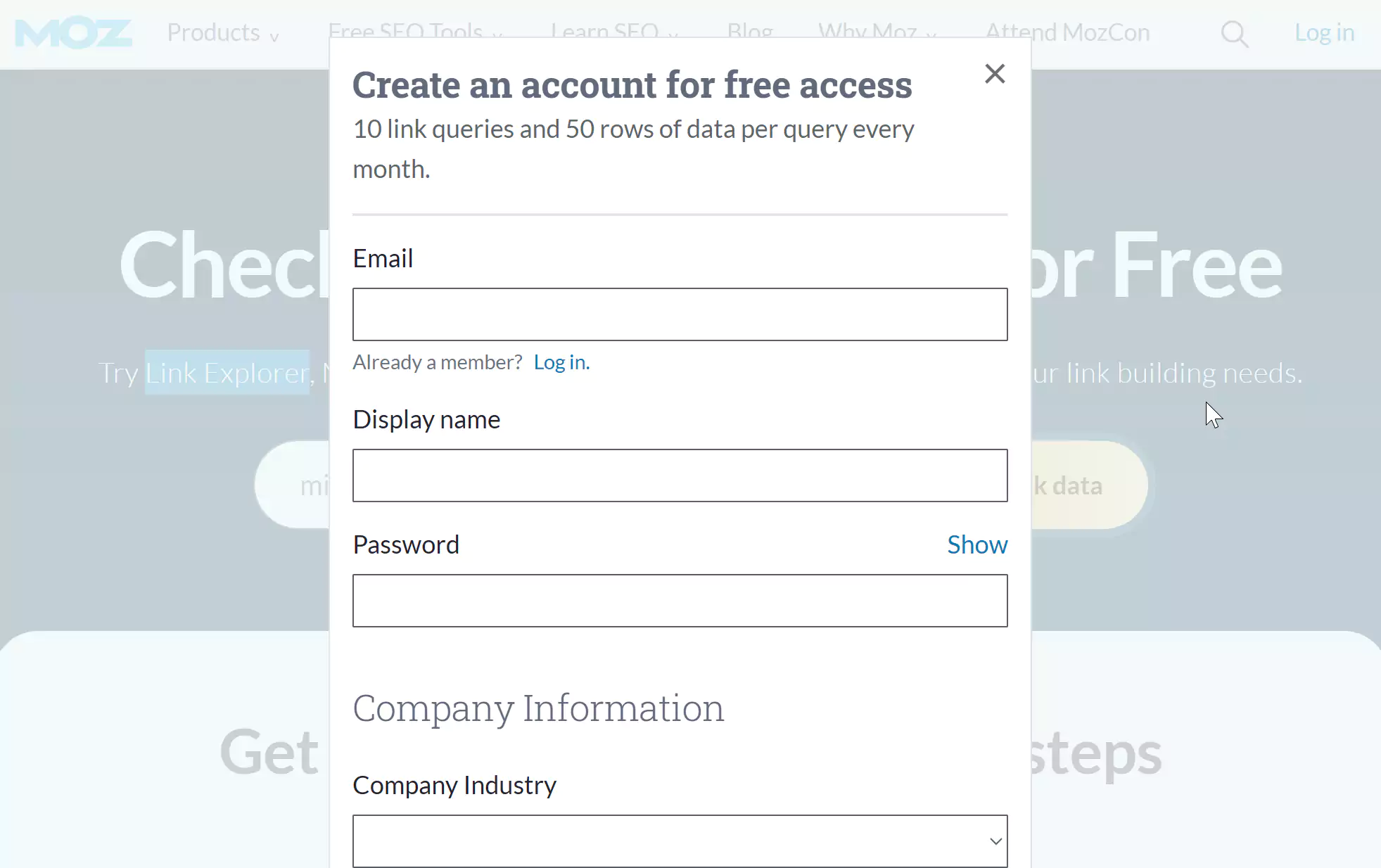
To continue, you’ll need to sign up on the MOZ website. If you already have an account, just log in. But if you’ve never registered before, a sign-up form will open up for you to fill out. Don’t worry about the cost either — creating an account and signing up is completely free.
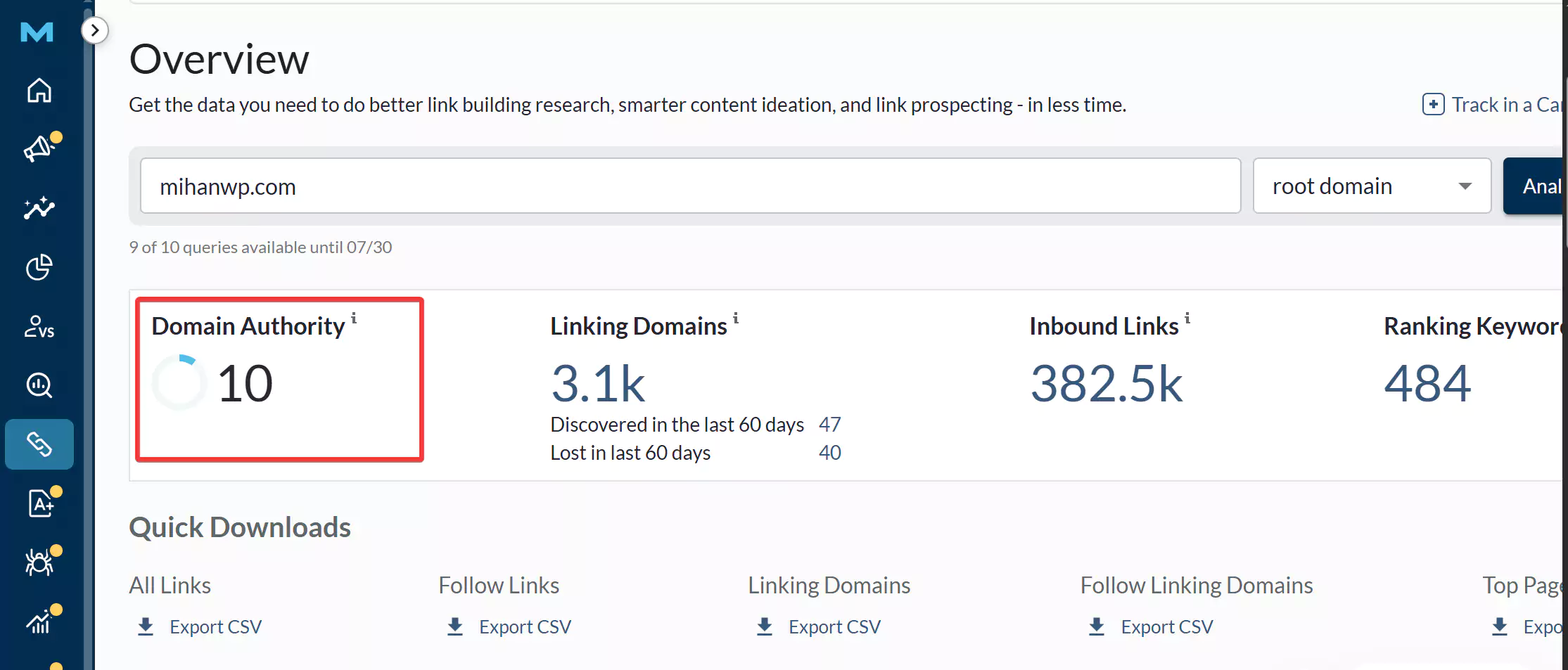
Once you’ve registered and verified your email, you can easily view all kinds of information that MOZ provides about your domain. One of these sections is exactly what we’re after: Domain Authority. The higher the number shown in this section, the more authority your domain has. It’s that easy to check how your site is doing.
How Do You Increase Your Site’s Domain Authority?
Alright, now we’ve reached the exciting part. Look, when your Domain Authority goes up, your chances of succeeding in business definitely go up too. So if you want to reach a solid position in your field and get ahead of your competitors, you really have no choice but to strengthen your Domain Authority.
Here, I’m going to walk you through two of the most important factors that make a difference in this area. Trust me — by following these seemingly small tips, you’ll be able to see the results with your own eyes.
On-Page SEO
The first and one of the most important things you need to do is on-page SEO. On-page SEO means all the work you do within your own site to optimize your content.
What I mean is: publish good, SEO-friendly content on your site. Use headings properly and correctly, and work on your internal linking in a professional way. Believe me, these simple things are the foundation of a powerful website.
Off-Page SEO
Once you’ve got your on-page SEO covered, it’s time for off-page SEO. Take this one seriously too and put real time into it. Off-page SEO means all the work you need to do outside of your website.
For example, here are a few important points to keep in mind:
- Strictly avoid getting spammy links.
- Engage and interact with reputable websites.
- Publish sponsored content or guest posts from time to time.
If you follow these points, your site’s Domain Authority will keep climbing day by day, and that’s what leads to a successful business.
An important warning: Never, ever buy backlinks! It might seem like a shortcut, but trust me, it’ll destroy your business before you know it. So don’t even go near it.
How Domain Authority Affects SEO
Let me share an interesting point that a lot of people get wrong. Your domain name itself has no direct impact on your site’s SEO. But keep in mind that the higher your Domain Authority is, the better you’ll show up in search results — no doubt about it. So at the end of the day, Domain Authority does affect SEO.
That said, every online business needs a proper name. Why? Because even without reading your site’s content, a visitor can get a rough idea of what they’ll find on it just by reading the name and address of your site. That’s why it’s better for your domain name to align with and relate to your business.
A Few Tips for Choosing a Better Domain Name
If you haven’t picked your domain name yet, keep these few tips in mind:
- Keep it short and concise: the shorter your domain name is, the easier it is for people to remember.
- Keep it simple and smooth: the more complicated the words you use, the less they’ll stick in people’s minds. So keep it simple.
- Think ahead: sure, your business might be small right now, but it’ll grow over time and step into the competitive arena. So pick a name from the very beginning that will still serve you well in the future and won’t hold you back.
If you follow these simple points, trust me, you’ll feel the results.
Factors That Influence Domain Authority
Now let’s go over a few of the factors that directly affect your Domain Authority.
Domain Age
From the very moment you register your site’s domain up until right now — that’s what’s called “domain age.” And to be honest with you, older domains usually carry more authority.
To find out how old a domain is, there are various tools out there, and one of the most important ones is WHOIS. Just go to the WHOIS website and enter the domain address you’re interested in. Then, on a new page, all the information about that domain will be displayed for you. In the “Important Dates” section, you can see the domain’s registration date, and by comparing it with today’s date, you can figure out how old it is. It’s as simple as that!

Content Quality
Keep this in mind: producing high-quality content plays a very important role in Domain Authority. Your content needs to be engaging enough that visitors are tempted to read it. On top of that, it should be relevant to the business and profession you’re in, so it helps you connect with your customers and share your products and services with them.
Never forget this one line: content creation is the beating heart of every business. So give the quality of your content some special attention.
What Is Page Authority?
So far, we’ve talked a lot about the authority of your site as a whole. Now let’s move on to Page Authority.
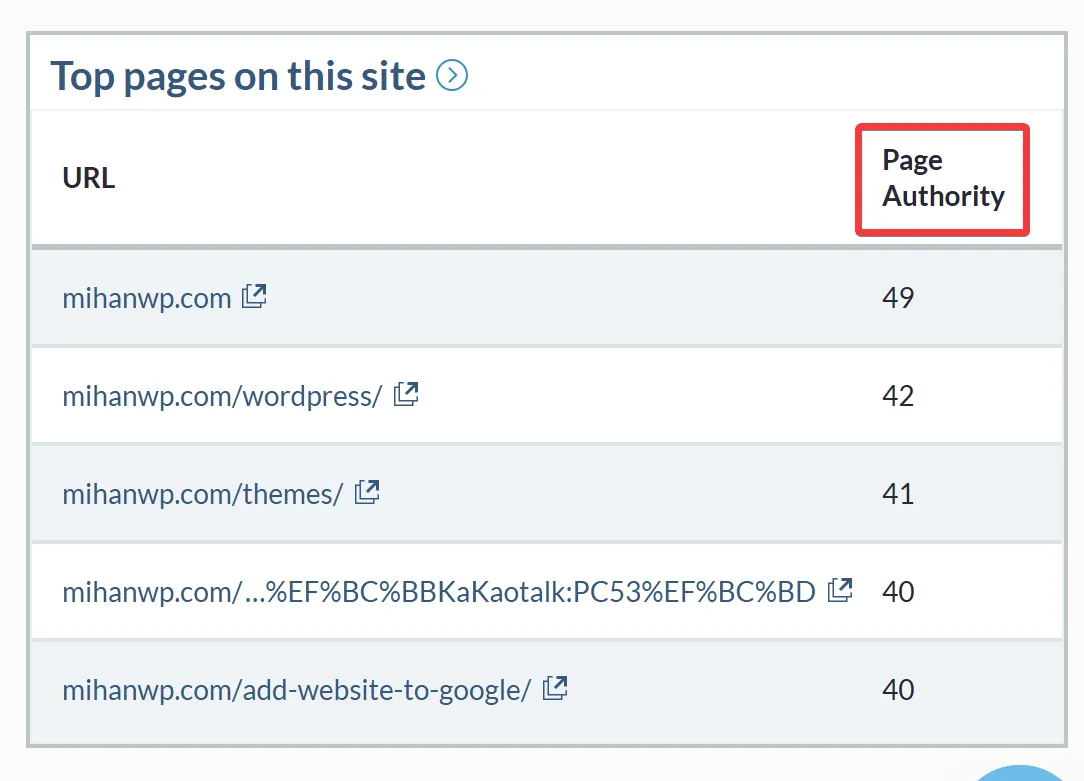
Just like Domain Authority, Page Authority shows the authority of an individual page on your site. In other words, instead of grading your entire site, it grades one specific page. This score was also created by MOZ, and it assigns a number between 0 and 100 to each page on your site.
The logic is the same as before: the higher this number is, the better the chances that specific page will earn a good position in the search results (SERP).
Factors That Influence Page Authority
We’ve already covered the factors that affect Domain Authority. Now let’s take a look at two important factors that influence Page Authority.
Page Age
If you truly value your website, make sure you understand this point: the more time that passes since a page was created, the more authority it gains. In other words, the older pages on your site carry a lot more value.
But there’s an important “but” here! Keep in mind that you always need to keep your pages’ content up to date. That’s because Google cares a lot about content being fresh and updated. So don’t just create a page and abandon it — you need to check in on it regularly and keep it updated.
Completely Original Content (No Copying Allowed!)
Websites whose content is recognized as a trusted, authoritative source never copy their material from other sites’ articles. My serious recommendation to you is to invest real time in creating your site’s content.
Let me be blunt: if you don’t produce high-quality, well-crafted content, your chances of succeeding are pretty much zero. So take this one very seriously.
Wrapping Up
So, by now we’ve figured out together that Domain Authority is the score for your entire site, while Page Authority is the score for each individual page. Both of them are numbers between zero and one hundred, and the higher they are, the better your site’s chances of getting seen on Google.
The most important things you need to do were these: work on your on-page and off-page SEO, produce high-quality and original content, keep your pages up to date, and stay away from any shady practices like buying backlinks.
If you follow these tips with patience and persistence, rest assured your site’s authority will climb higher day by day, and your business will become more successful too. Now it’s your turn to get to work! 🙂

Ahura WordPress Theme
The Power to Change EverythingElementor Page Builder
The most powerful WordPress page builder with 100+ exclusive custom elements.
Incredible Performance
With Ahura’s smart modular loading technology, files load only when they are truly needed.
SEO Optimized for Google
Every line of code is carefully aligned with Google’s algorithms and best practices.

To post a comment, please register or log in first.