
 Tutorials


 Ahura
Ahura Plugins

 Blog
BlogThe Law of Hooks in Content Production and Using It to Attract an Audience
- Tutorials
- Updated on

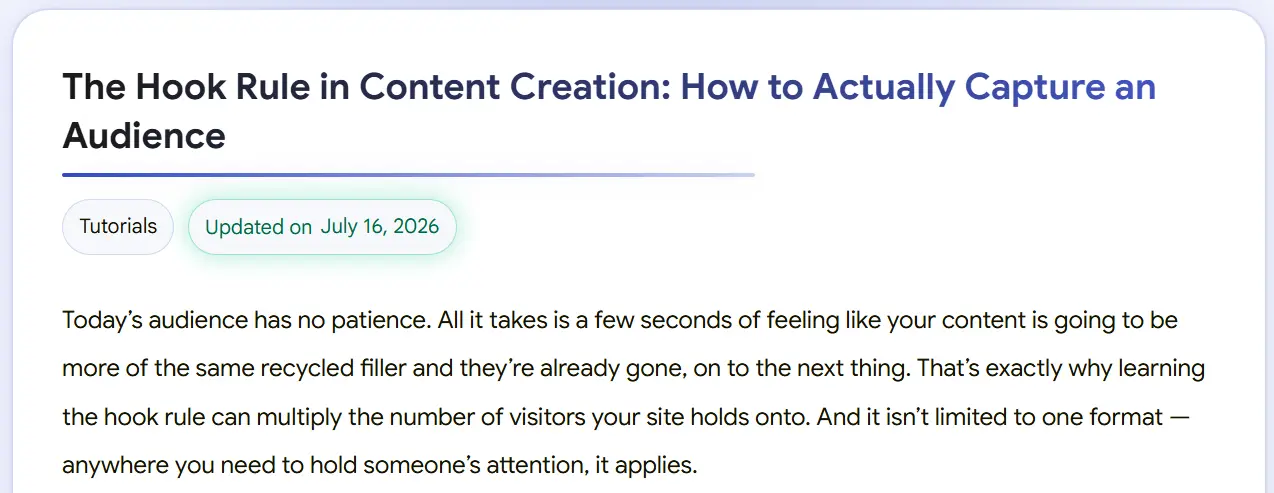
Today’s audience has no patience. All it takes is a few seconds of feeling like your content is going to be more of the same recycled filler and they’re already gone, on to the next thing. That’s exactly why learning the hook rule can multiply the number of visitors your site holds onto. And it isn’t limited to one format — anywhere you need to hold someone’s attention, it applies.
Table of Contents
What Is the Hook Rule?
Put simply: you don’t have much time to win someone over. Right now, as you’re reading this, part of your brain is scanning for a cliché — an excuse to conclude “this is just like all the others, don’t waste your time.” All I’d have to do is open with something generic and that’s exactly what would happen. I’d lose you.
So the hook rule in content creation means knowing which techniques grab an audience’s attention and keep them with you all the way to the end of the article or the video. And you’re doing it in a world where the volume of information grows every second and the competition for attention is harder than it has ever been.
When you produce content, you’re competing over something genuinely scarce: people’s eyes. It’s one of the hardest things you can compete for. If you want to hook someone fast, you have to give up clichéd phrasing, snarky throat-clearing, and long, dull blocks of text. Those are the things that make a reader decide your content is boring.
How the Hook Rule Affects Your Content
Don’t open your content by improvising or poking at the topic from a distance. Watch out for sentences that exist only to fill space. The first paragraph of an article is its most valuable real estate, because those few lines decide whether the reader stays or leaves. People read your opening paragraph and make a judgment: is the rest worth my time?
So if you want good content, pull the reader straight to the point from the very first line. Don’t make them wait for it.
The Hook Rule in Video
When you’re making a film, try to dedicate the first ten minutes entirely to hooking the viewer. Get that right and your odds go way up, because the viewer gets tempted into watching what comes next — and that cycle repeats all the way to the end.
It’s no different for instructional videos. Don’t spend the first ten minutes setting the stage. Padding and preamble won’t convince anyone to keep watching. The sooner you get to the thing they came for, the better your chances of keeping them.
Video on Social Media
Here the clock is much tighter. In a short-form social video, you have roughly seven seconds to catch someone’s eye. The most effective move is to trigger their curiosity immediately — in the text, in the visuals, or both. If those first few seconds are tempting enough, they’ll stay with you to the end.
And this is exactly where one of the biggest mistakes shows up: people open a video by saying hello and introducing themselves. You’ve given the viewer nothing interesting and no reason to stay. Someone scrolling a feed has zero patience for that kind of stock intro — they’re past you in an instant.
Introduce yourself at the end, if at all. Earn the introduction first.
Numbers as Hooks
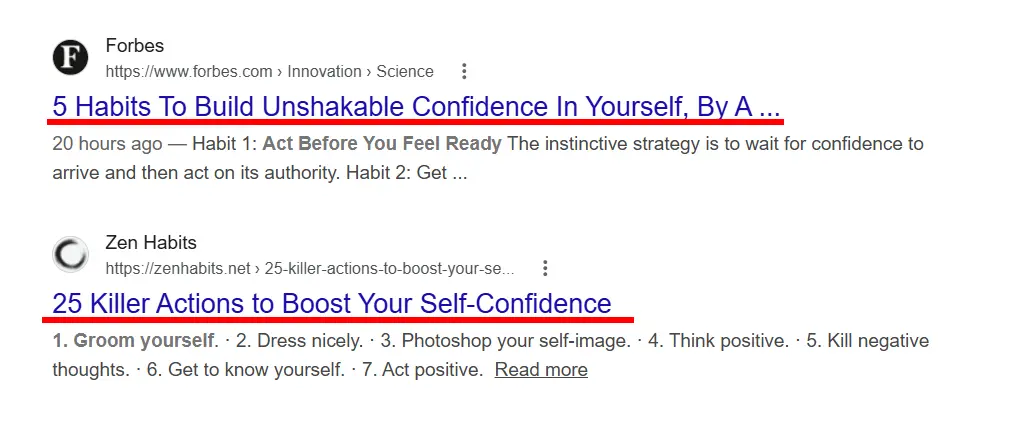
Numbers are a great tool for grabbing attention quickly, and they occupy the reader’s mind. The reason is simple: a number signals precise data, and people trust things that are specific and measurable more than things that are vague.
It’s why headlines like “7 ways to…” and “we cut load time by 63%” keep working — a number promises the reader a defined shape and a defined ending.
Try to impress your audience with your knowledge and your precision right from the start. Just keep one thing in mind: every number and every fact you hand your audience has to be genuinely accurate. Otherwise the very thing that was supposed to build trust is what destroys it.
The Descriptive Method
Here the job is to describe your subject so well that the reader is tempted to keep going. When you explain something with real detail and vivid imagery, the reader gets curious about what happens next.
This approach shows up most in narrative-style articles, but the truth is that the power of description works in any kind of writing.
Figurative Language
Literary devices like simile and metaphor are also good tools for pulling a reader in, because they let them see the subject from a fresh angle. When a writer uses a comparison to connect two seemingly unrelated things, the reader is caught off guard — and that surprise is what sticks them to the page.
The Story Hook
With this method, you open the article with a short story or an anecdote. People enjoy reading stories, especially ones that are memorable or that stir up something in their own minds. Just make sure the story genuinely connects to the main topic.
This kind of article may run a little longer than the rest, and that’s fine — just don’t let the story swallow the piece. The story is the appetizer, not the meal.
Wrapping Up
In the end, every one of these techniques serves the same goal: get to the point fast and cut the filler. Write in a way that doesn’t exhaust your audience halfway through, and always give them a reason to keep going.
That’s what a good hook is — the thing that keeps someone reading without them ever noticing how they got to the end. Good luck out there. 🙂

Ahura WordPress Theme
The Power to Change EverythingElementor Page Builder
The most powerful WordPress page builder with 100+ exclusive custom elements.
Incredible Performance
With Ahura’s smart modular loading technology, files load only when they are truly needed.
SEO Optimized for Google
Every line of code is carefully aligned with Google’s algorithms and best practices.

To post a comment, please register or log in first.