
 Tutorials


 Ahura
Ahura Plugins
 Blog
BlogWhat Is Evergreen Content? How to Create Content That Drives Traffic for Years
- SEO
- Updated on

One of the biggest challenges for website owners and content creators is producing content that only attracts traffic for a short period of time and is then forgotten. Content that is published with significant time and effort, but after a few weeks or months, no longer provides value to users and does not receive meaningful traffic from Google.
In contrast, there is a type of content that remains useful over time, continues to meet users’ needs, and consistently attracts visitors from search engines. This type of content is called “evergreen content”; content that can become one of the most important assets of any website.
Evergreen content not only plays a key role in increasing website traffic, but also serves as a foundation for building trust, strengthening branding, and even boosting sales. For this reason, understanding the concept of evergreen content and learning the correct way to produce it is essential for every site manager, SEO specialist, and digital marketing professional.
In this article, we aim to thoroughly examine what evergreen content is, why it is highly important for SEO and website growth, and how to create content that maintains its value over time and consistently drives traffic to your site. If you are looking to create lasting and impactful content, stay with us until the end of this article.
Table of Contents
What Is Evergreen Content?
Evergreen content refers to a type of content whose value and usefulness are not negatively affected by the passage of time. This type of content is created in a way that remains beneficial to users even months or years after publication and can continue to attract visitors from search engines.
Unlike many news-based or trending pieces that have a short lifespan, evergreen content is built around users’ consistent and ongoing needs.
The reason for using the term “evergreen” for this type of content is its similarity to evergreen trees. Just as these trees maintain their freshness throughout all seasons of the year, evergreen content also does not lose its value over time and remains consistently usable. Of course, this longevity does not mean the content remains unchanged; rather, it means that its core remains stable and can be kept fresh and practical through periodic updates.
One of the most important features of evergreen content is that it is not dependent on time, date, or a specific event. This type of content answers questions and needs that users continuously search for. For this reason, such content can consistently attract traffic from Google and become one of the valuable pages of a website. In addition, evergreen content can be updated, and by adding new information, up-to-date examples, or revising older sections, its useful life can be extended.
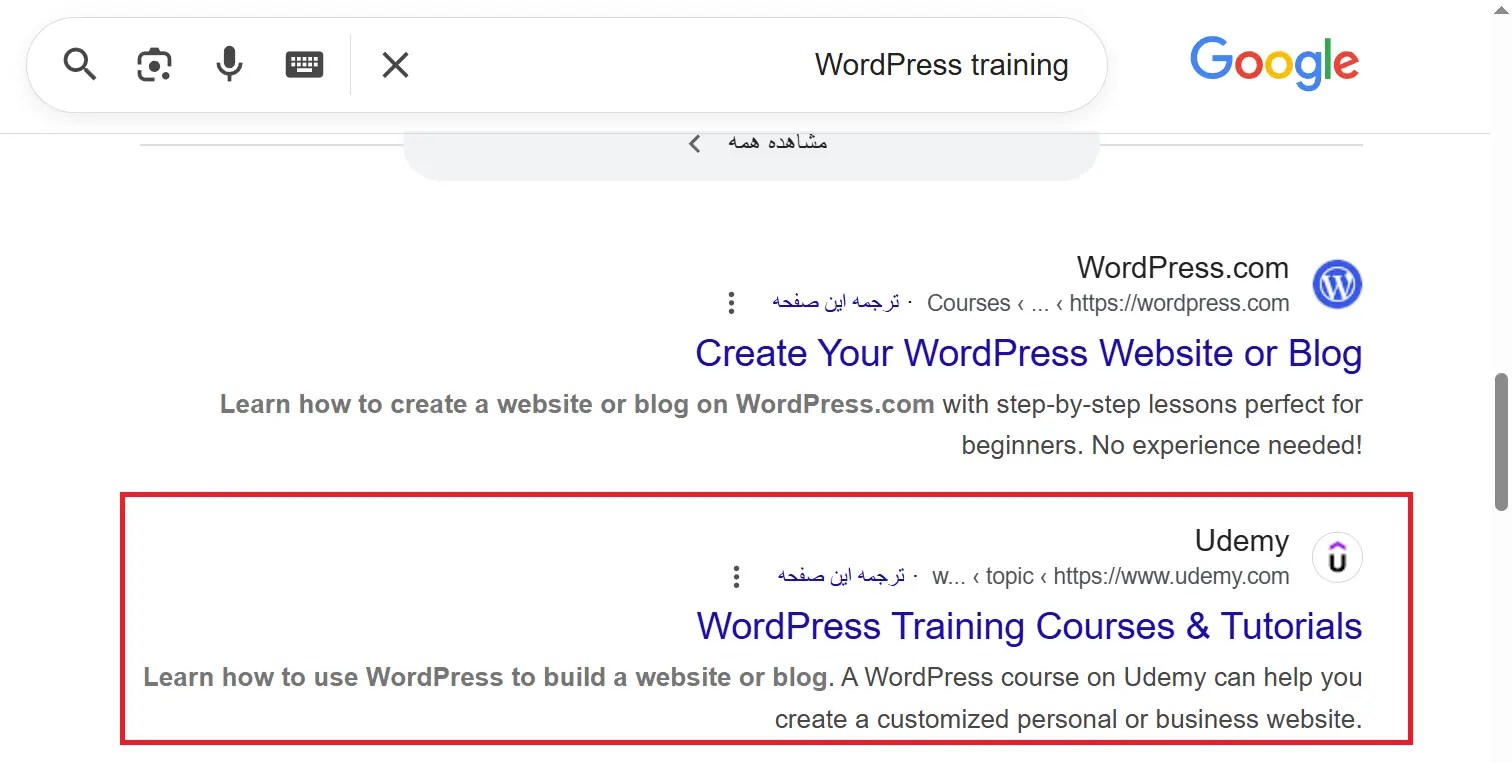
To better understand this concept, it is enough to consider the difference between two types of content. An article titled “What Is WordPress?” is a classic example of evergreen content, because users may look for the answer to this question at any time. In contrast, content titled “New WordPress 6.5 Update” depends on a specific version and time period and eventually loses its value and search volume. This simple difference shows why evergreen content can play a key role in a content strategy and the long-term growth of a website.
Why Is Evergreen Content Vital for SEO?
One of the most important reasons evergreen content plays a vital role in SEO is its ability to generate consistent traffic from Google. Unlike news or short-term content, which is usually visible for only a limited period, evergreen content can continue appearing in search results for months or even years after publication, attracting new users to the website. This type of traffic is not only more sustainable but also higher in quality, as users arrive with a clear intent and are seeking practical and reliable information.
On the other hand, evergreen content helps reduce content production costs. When a comprehensive and well-structured page is created and updated periodically, there is no longer a need to constantly produce new content from scratch to maintain traffic. In fact, instead of publishing a large volume of shallow content, focusing on producing a few in-depth and lasting pieces can deliver significantly greater returns for a website.
Evergreen content also plays an important role in increasing domain authority. When a page consistently provides accurate and complete answers to users’ needs and achieves a high satisfaction rate, Google recognizes that page—and consequently the entire website—as a credible source. Over time, this credibility improves the rankings of other pages on the site and strengthens the brand’s position in the minds of both users and search engines.
In this context, the 80/20 rule clearly demonstrates the importance of evergreen content. Typically, a large portion of a website’s traffic and results comes from a limited number of its pages. These pages are the evergreen pieces that have been properly selected, created, and maintained. In simpler terms, a small percentage of content can generate the majority of a site’s traffic and value—provided it is strategically designed.
The role of evergreen pages is not limited to attracting visitors; they also hold an important position in the sales funnel. Users often turn to educational and guide-based content during the early stages of learning about a topic or problem. If this content is properly designed, it can build trust and gradually guide users toward using services or purchasing products. For this reason, evergreen pages are often the first point of contact between a user and a brand.
Ultimately, evergreen content plays an effective role in converting users into leads and customers. When users enter a site through comprehensive and valuable content and find answers to their questions, the likelihood of engaging with other sections of the site increases. This engagement may lead to registration, downloads, subscriptions, or purchases. Therefore, evergreen content is important not only for SEO but also for the real and sustainable growth of an online business.
The Difference Between Evergreen Content and Other Types of Content
To better understand the value of evergreen content, it is necessary to examine it alongside other types of content. Each type of content has its own specific purpose and place, and it cannot be said that one type can completely replace the others. However, differences in lifespan and level of impact make evergreen content play a more prominent and lasting role in a content strategy.
Some content is produced with the goal of attracting quick, short-term traffic and is usually tied to events, news, or current trends. Although this type of content can generate high traffic within a limited period, it eventually loses its value. In contrast, evergreen content is created with a focus on users’ ongoing needs, which allows it to become one of a website’s primary assets over the long term.
The table below briefly shows the differences between content types in terms of lifespan and purpose:
| Content Type | Lifespan | Purpose |
|---|---|---|
| News Content | Short-term | Attracting immediate traffic and leveraging trends |
| Seasonal Content | Medium-term | Running campaigns and time-based activities |
| Basic Educational Content | Medium-term | Providing initial familiarity with a topic |
| Evergreen Content | Long-term | Core website asset and generating sustainable traffic |
As shown in the table, news and seasonal content are primarily useful for gaining visibility within a specific timeframe and usually require continuous production. Basic educational content can also be effective in initially attracting users, but due to its limited depth, it typically does not maintain high rankings in search results.
In contrast, evergreen content, with its comprehensive structure, thorough response to user needs, and ability to be updated, can retain its value for a long time. For this reason, this type of content not only plays a key role in SEO but is also considered the foundation and main pillar of any website’s content strategy.
What Topics Are Suitable for Evergreen Content?
Choosing the right topic is one of the most important stages in creating evergreen content. Even if you have the best structure and the strongest writing, if the selected topic does not address users’ ongoing needs, the content will not perform well in the long term. Therefore, identifying topics that are consistently searched and do not lose their value over time plays a key role in the success of this type of content.
One of the best options for evergreen content is educational material that covers a subject from beginner to advanced levels. This type of content helps users become familiar with a skill or concept step by step and gradually expand their knowledge. Since learning a subject is usually not limited to a specific time, these tutorials will always remain useful for a wide range of users.
Comprehensive guides, also known as Ultimate Guides, are among the most popular and effective types of evergreen content. These guides aim to examine a topic thoroughly and in depth, answering all potential user questions. When users can meet all their needs by reading a comprehensive guide, the likelihood of them returning to the website and trusting the brand increases significantly.
Topics related to the fundamental concepts of any field are also excellent choices for producing evergreen content. These concepts typically form the foundation for understanding a subject, and new users are always looking to learn them. As a result, content that clearly and simply explains these concepts retains its value even over time.
Frequently asked questions from users are another excellent source of ideas for creating evergreen content. These questions usually reflect users’ real and ongoing needs, and providing well-structured answers can attract targeted traffic from Google. When content accurately addresses common questions, its chances of appearing in search results and even in Google’s featured snippets increase.
To better illustrate this, consider a few common examples. Buying guides are among the most widely used types of evergreen content, as users are always seeking information and comparisons before making a purchase. Content structured around “What is X?” or complete step-by-step tutorials on a subject are also continuously searched. In addition, well-structured and analytical comparisons can serve as evergreen content, provided that they focus on stable and fundamental criteria rather than temporary or short-lived features.
How to Produce Evergreen Content?
Producing evergreen content is only half the journey; the more important part is maintaining and caring for it over time. Just like a valuable asset requires attention, evergreen content cannot maintain its position without consistent care and gradual updates. If content that was once useful is left unattended, it will gradually lose its value in the eyes of users and search engines. In the comprehensive Top Site course, there is extensive discussion about creating structured and evergreen content. To join this course, click the button below.
Choosing the Right Keyword
The first and most important step in producing evergreen content is selecting the right keyword. The chosen keyword must align with the user’s search intent. In evergreen content, the main focus should be on informational keywords—phrases that users search for to learn, gain information, or solve a problem, rather than to make an immediate purchase or follow a specific event.
For example, a phrase like “buy Samsung phone 2025” is tied to a specific time and will lose its appeal and search volume after a while. In contrast, a phrase like “Samsung phone buying guide” refers to an ongoing need and can continue attracting new users to the website over time. This small difference in keyword selection has a significant impact on the longevity of the content.
Designing the Content Structure Before Writing
After choosing the keyword, designing the content structure before starting to write is highly important. Evergreen content should be written in a way that is understandable for beginners while also providing added value for advanced users. Therefore, the user’s learning path—from the simplest concepts to more advanced topics—must be carefully structured.
At this stage, all potential user questions should be considered, and the content should be organized so that answers are easily accessible. Proper use of headings and subheadings plays a key role in readability and user experience, and it also helps search engines better understand the structure of the content. The clearer and more organized the structure, the longer users will stay on the page.
Producing Deep and Comprehensive Content
Evergreen content must be in-depth, complete, and trustworthy. This type of content should not settle for surface-level or general explanations; instead, it needs to examine the topic from different angles and provide accurate, practical information. Comprehensive content eliminates the need for users to consult other sources, which is one of the key factors for SEO success.
When writing such content, concepts should be explained from the user’s perspective, not the writer’s. Some terms or points may seem obvious to the writer but may be unfamiliar to someone new to the field. Paying attention to this difference in perspective ensures the content is useful and valuable for a wider range of users.
Enriching Content and Increasing Its Value
To enhance the effectiveness of evergreen content, text alone is not enough—it must be enriched. Using videos, relevant images, infographics, and real-life examples helps users better understand concepts and improves the overall user experience. These elements increase engagement and encourage users to spend more time on the page.
Additionally, incorporating personal experiences or presenting real case studies can strengthen user trust. When the audience feels that the content is based on genuine experience and knowledge rather than simply rewriting other sources, they form a deeper connection with it. This trust is one of the most important factors that transforms ordinary content into lasting evergreen content.
The Role of User Experience (UX) in the Success of Evergreen Content
Even the best evergreen content cannot achieve real success if it does not provide a proper user experience. User experience, or UX, is one of the key factors that directly affects audience satisfaction, time spent on a page, and ultimately the content’s ranking in search results. Google has clearly shown that it favors pages that, in addition to high-quality content, provide a comfortable and enjoyable experience for users.
Content readability is the first step in creating a positive user experience. When text is written in an organized manner, with clear paragraphs and appropriate spacing, users can read it without fatigue. Choosing a suitable font, using the correct text size, and avoiding dense and lengthy blocks of text all play an important role in improving readability and helping users connect more effectively with the content.
Scannability is also a key feature of evergreen content. Many users do not read a page word for word; instead, they first scan it to find the section they are looking for. When content has a clear structure, distinct headings, and logical segmentation, users can reach the answer to their question more quickly, which positively impacts their experience.
Page loading speed is another important factor in the success of evergreen content. If a page loads slowly, even valuable content may go unnoticed. Users expect web pages to be accessible in the shortest possible time, and any delay can cause them to leave the site. Optimizing images, code, and page resources plays a significant role in increasing speed and retaining users.
Mobile-friendliness is now considered a necessity. A large portion of users access websites via mobile phones, and if content is not displayed properly on mobile screens, the user experience is significantly harmed. Responsive design and proper content display across different devices are prerequisites for the success of evergreen content.
Finally, smart internal linking can complete the user experience. When evergreen content strategically links to other related pages, users can more easily continue their learning journey and access additional information. This not only increases the time users spend on the site but also helps search engines better understand the relationships between the site’s pages.
What Type of Content Does Google Value?
Understanding what type of content Google values is one of the keys to success in producing evergreen content. In recent years, Google’s algorithms have shifted toward evaluating user behavior and satisfaction, and they no longer rely solely on keyword usage or content length. Therefore, content that creates a positive user experience has a better chance of achieving a strong position in search results.
One of Google’s most important criteria is user satisfaction with the provided content. This satisfaction is measured through user behavior; for example, the amount of time a user remains on a page or the click-through rate of a page’s result in search listings. When a user spends a reasonable amount of time reading a page and does not quickly return to the search results, it signals to Google that the content was useful and relevant to the user.
Another important factor is providing a complete and precise response to the user’s search intent. Google strives to display pages that align exactly with the user’s purpose behind a search. If a user is looking to learn a concept, content that merely offers a superficial introduction or immediately directs them toward a purchase cannot create full satisfaction. In contrast, content that comprehensively answers the user’s questions has a much higher chance of gaining credibility from Google.
Keeping content up to date also plays a significant role in its credibility. Even evergreen content, if left without updates for a long time, may lose part of its value. Google prefers to display pages whose information is accurate, reliable, and aligned with current conditions. Regularly updating content demonstrates that a website cares about the quality of information and the needs of its users.
Finally, one of the most important frameworks Google uses to evaluate content quality is the concept of E-E-A-T, which stands for Experience, Expertise, Authoritativeness, and Trustworthiness. Content that is based on real experience, presented by a knowledgeable individual or source, possesses appropriate authority, and conveys a sense of trust to users has a much greater chance of succeeding in search results. Following these principles ensures that evergreen content is not only valuable to users but also recognized by Google as a reliable source.
How to Keep Evergreen Content Evergreen?
Producing evergreen content is only half the journey; the more important part is maintaining and caring for it over time. Just like a valuable asset requires attention, evergreen content cannot maintain its position without ongoing care and gradual updates. If content that was once useful is neglected, it will gradually lose its value in the eyes of both users and search engines.
The Importance of Updating Content
Regularly updating content is one of the main factors that keeps a page alive and trustworthy. Over time, new information is published, tools change, and market conditions evolve. Adding new information to content shows that the page is still active and reliable. At the same time, removing outdated data is equally important, as the presence of old information can confuse users and reduce their trust.
Updating examples also plays an important role in maintaining the quality of evergreen content. Examples that were once relevant may no longer align with current conditions. Replacing them with new and relevant samples helps users connect better with the content and understand concepts more accurately.
Proper Timing for Content Updates
The timing of content updates depends on the type of topic and the pace of change in that field. Some content needs to be reviewed and revised monthly, while for others, seasonal updates or even longer intervals may be sufficient. In addition to this general schedule, paying attention to market changes and Google updates is especially important. Whenever a significant change occurs in regulations, tools, or user behavior, related content should also be reviewed.
For example, in content written as a mobile phone buying guide, changes such as sanctions or announcements regarding Google’s support or lack of support for certain brands can directly impact users’ decisions. In such cases, adding new explanations about Google’s support status for a specific brand’s phones or any imposed limitations ensures that the content remains useful and trustworthy. It is precisely this attention to detail and timely updating that keeps content truly evergreen over time.
Common Mistakes in Creating Evergreen Content
Although creating evergreen content may seem simple at first glance, in practice there are mistakes that can prevent a piece of content from ever achieving longevity. Recognizing these errors helps us choose the right path from the beginning and invest our time and energy in producing content that creates real long-term value.
One of the most common mistakes is choosing the wrong keyword. Sometimes the focus is placed on phrases that are tied to a specific time, trend, or event, and as a result, they have a short lifespan. Such keywords may generate good traffic initially, but they quickly decline and cannot provide sustainable traffic for the website. Keyword selection for evergreen content should be based on users’ consistent and ongoing needs, not short-term market excitement.
Superficial writing is another mistake that directly affects the quality of evergreen content. Content that only provides general explanations without going into practical details cannot gain the user’s trust. Such content usually forces users to consult other sources to complete their information, which reduces the page’s value in the eyes of both Google and users.
Failing to update content is also a serious error in maintaining evergreen content. Even if a piece of content was comprehensive and practical at the time of publication, without periodic review and revision, its information gradually becomes outdated. This not only reduces user satisfaction but also affects the page’s credibility in search results. To remain durable, evergreen content requires continuous attention and care.
Finally, focusing too much on content length instead of quality is another common mistake. Length alone does not create value unless each section provides useful and practical information. Content written merely to increase word count not only fails to help users but can also damage their experience. In evergreen content, quality, coherence, and informational value matter more than the apparent length of the text.
Successful Examples of Evergreen Content
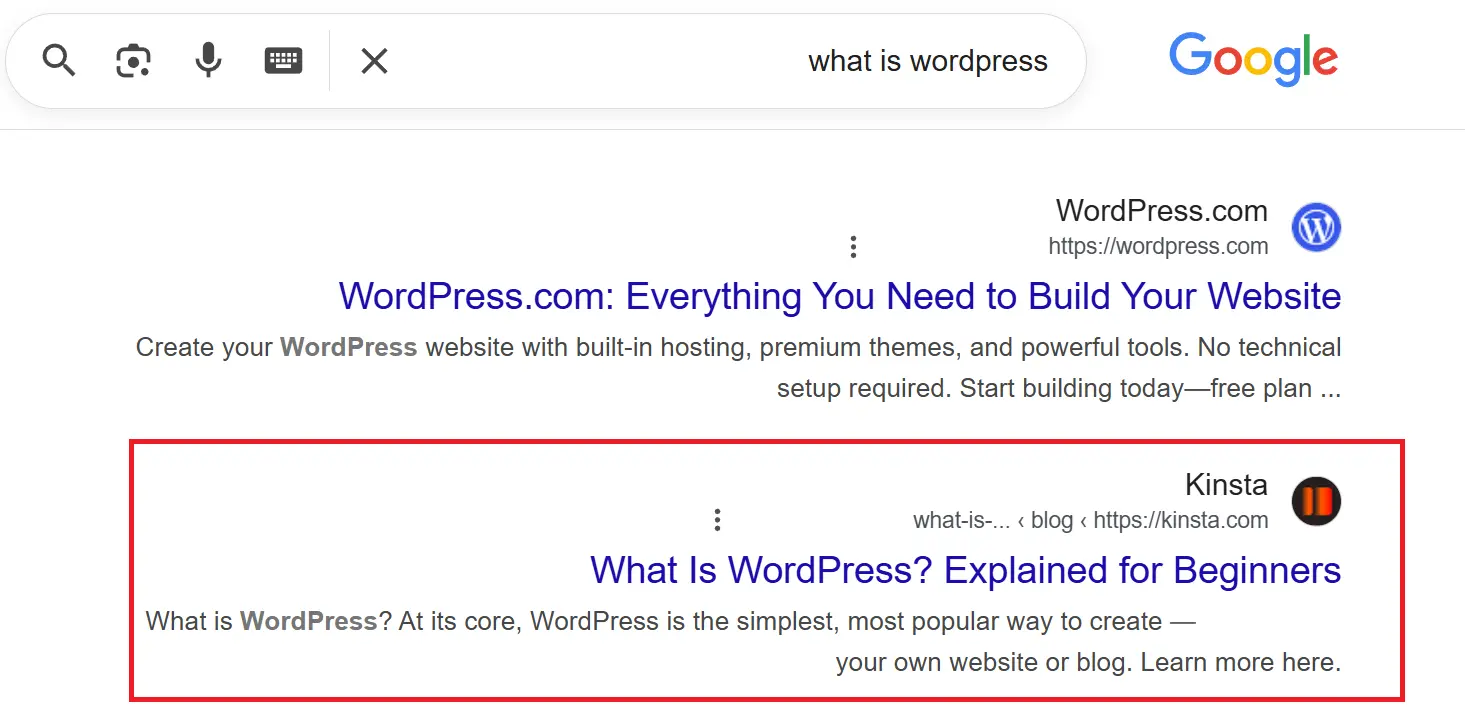
To better understand the impact of evergreen content, reviewing real and successful examples can be very helpful. When content is properly designed and executed, its results are clearly visible in increased traffic, attracting targeted users, and business growth. One well-known example in this area is an article titled “What Is WordPress?” which is recognized as a reference piece on many educational websites.
The success of this type of content primarily stems from fully addressing users’ needs. Users who search for “What is WordPress?” are usually looking to understand its concept, applications, and benefits. A successful evergreen article on this topic starts with simple, introductory explanations and gradually moves toward more specialized subjects such as features, advantages, disadvantages, and practical uses of WordPress. This comprehensive coverage allows users with different levels of knowledge to benefit from the content.
Another key factor in the success of this content is regular updates. With every major change in WordPress versions, the addition of new features, or updates related to security and performance, the article’s information is revised accordingly. This ensures that the content remains fresh and reliable, and users do not feel they are encountering outdated information. Google also recognizes such pages as credible resources and grants them higher rankings.
The results of this type of evergreen content are usually visible in the long term. A page like “What Is WordPress?” can consistently attract traffic from Google and become one of the most visited pages on a website. These visitors are often individuals at the beginning of their learning or decision-making journey, and if they have a positive experience, they are guided to other sections of the site. This process can ultimately lead to registrations, service usage, or converting users into customers.
Overall, successful examples of evergreen content demonstrate that focusing on real user needs, providing comprehensive information, and continuously updating content can transform a simple article into a valuable and lasting asset for a website—an asset that not only generates traffic but also plays a significant role in building trust and supporting long-term brand growth.
Conclusion
In this article, we comprehensively explored what evergreen content is and why it plays a key role in the sustainable growth of a website. We saw that, unlike temporary and short-lived content, evergreen content can maintain its value over time and consistently generate targeted traffic. This type of content delivers results when created with a long-term perspective and based on users’ real needs.
The process of creating evergreen content begins with selecting the right keyword—one that users search for consistently and that is not dependent on a specific time or trend. Next comes producing deep and comprehensive content that answers all user questions and eliminates the need to consult other sources. Enriching the content with complementary elements such as real examples, practical experiences, and multimedia further multiplies its value and impact. Finally, continuous updates ensure that this digital asset remains alive, credible, and useful over time.
An important point not to forget is that evergreen content is not just an ordinary post; it is a valuable digital asset for your business. Each evergreen page can work for your website for years, build trust, and attract new users to your brand—provided it is created and maintained properly.
If until today your focus has been mainly on producing short-term content, now is the best time to change your approach. You can review your old website content, identify pages with evergreen potential, and improve them. You can also start creating your first evergreen page right now and lay the foundation for a lasting and effective content strategy. The result of this path will be sustainable growth, continuous traffic, and real value for your website. Stay happy and successful. 🙂
Ahura WordPress Theme
The Power to Change EverythingElementor Page Builder
The most powerful WordPress page builder with 100+ exclusive custom elements.
Incredible Performance
With Ahura’s smart modular loading technology, files load only when they are truly needed.
SEO Optimized for Google
Every line of code is carefully aligned with Google’s algorithms and best practices.

To post a comment, please register or log in first.