
 Tutorials


 Ahura
Ahura Plugins

 Blog
BlogWhat Is a Backlink and How Can We Build Backlinks Without Getting Penalized by Google?
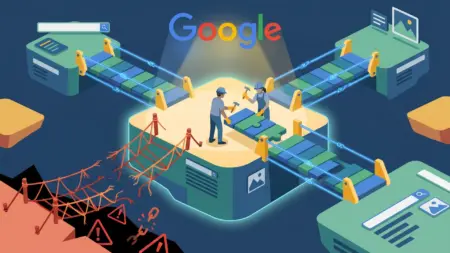
Let’s start with a question: why do some websites seem glued to the first page of Google and never move, while your site—despite having great content—stays stuck at the back of the line? In many cases, the answer is one word: backlinks. The very thing that, if built correctly, can lift your site up—and if built the wrong way, can get you penalized by Google.
The truth is, backlinks are one of those topics everyone has heard of, but few really know how to approach properly so that they get results without causing trouble. Many people still think the more links, the better—and that exact misconception is what ends up ruining their site.
In this article, we’re going to go over everything in a simple and friendly way: what backlinks actually are and why they matter so much, the difference between good and bad links, how Google deals with buying links, and most importantly, how you can build high-quality links for your site using completely legitimate methods—without fearing penalties. This article has also been updated based on Google’s latest behavior in 2026, so you can rest assured the information isn’t outdated. Let’s get started.
Table of Contents
What Is a Backlink and Why Is It Vital for SEO?
Let’s start with a very simple definition. A backlink (or “inbound link”) is any link that points to your website from another site. In other words, when another website links to one of your pages within its content, you’ve gained a backlink. That’s it—simple as that.
Now, why is Google so sensitive about these links? Because from Google’s perspective, every backlink is a kind of “vote of confidence.” When a website links to your content, it’s essentially telling Google: “I trust this site; its content is worth reading.” The more numerous and credible these votes are, the more trustworthy Google considers your site.
Let me make it clearer with a relatable example. Imagine you’re looking for a good mechanic. If you randomly pick one from the internet, you don’t really know what you’ll get. But if three or four trusted friends all recommend the same mechanic, you’ll confidently go to them, right? Backlinks play exactly this role in the online world; they are your referrers and guarantors in Google’s eyes. Of course, it makes a difference whether the recommendation comes from a reputable person or a suspicious stranger—and that’s precisely the issue of link quality, which we’ll cover in the next section.
Here’s something to show you how serious this topic is: backlinks are one of Google’s most important ranking factors. Various studies have shown that websites ranking at the top of search results usually have more and higher-quality backlinks than lower-ranking sites. So ignoring backlinks means voluntarily handing a major advantage to your competitors.
But—and this “but” is very important—not all backlinks are good. Some not only fail to help but can actually get your entire site into trouble. Let’s see exactly what makes a good link different from a bad one.
The Difference Between Good and Bad Backlinks: Why Quality Matters More Than Quantity
If there’s only one thing you remember from this article, let it be this: one high-quality backlink from a reputable website is more valuable than hundreds of low-quality ones. Many people get this backwards and think they need to collect as many links as possible. The result? A link profile full of junk that Google views with suspicion.
Google is no longer the simple search engine you could fool just by increasing the number of links. Today, with the help of artificial intelligence, it carefully evaluates link quality and can easily detect whether a link is natural or artificial and manipulated. So let’s see what a good link looks like.
A good backlink has these characteristics:
First of all, it comes from a website related to your field of work. For example, if you run a cooking website, a link from a reputable cooking blog is a thousand times more valuable than a link from an unrelated website about car parts. Google places great importance on this topical relevance.
Second, it comes from a reputable website with real traffic. A site that has a good standing with Google and real users carries more weight when it gives you a vote of confidence.
Third, the link is placed within the main body of the content, not tucked away in a footer or sidebar. When a link appears naturally in the middle of a relevant article, it feels more organic to users and is more valuable to Google.
And fourth, the anchor text is natural and varied, without excessively focusing on a specific keyword. (This is an important topic that we have dedicated an entire section to.)
In contrast, a bad backlink usually looks like this:
They come from spammy, low-quality websites, from worthless directories that merely line up links, or from artificial link-building networks known as PBNs (short for Private Blog Network). These are networks of fake websites created solely for exchanging links. Google knows these patterns very well, and when it catches them, not only do those links become ineffective, but your entire website may also be penalized.
Let me sum it up with a simple analogy: imagine you’re sending out your resume for an important job. A recommendation letter from a reputable and well-known university professor is far more valuable than a hundred recommendations from unknown and unreliable people. Backlinks are exactly the same. So instead of spending your energy collecting a large number of links, focus on getting a few high-quality ones.
Now that you understand the difference between good and bad links, let’s move on to one of the most tempting yet dangerous practices many people turn to: buying and selling backlinks.
What Does Google Do About Buying and Selling Backlinks?
Well, we’ve reached the most tempting shortcut in the world of SEO. You’re probably thinking, “If high-quality links are this important, I’ll just go buy a few and that’s it!” Let me be blunt: in 2026, buying backlinks is one of the fastest ways to destroy your website. It’s not just useless—it’s dangerous.
First of all, this practice is a violation in Google’s eyes. In its official guidelines, Google explicitly states that buying or selling links with the intent of manipulating rankings is against its rules. So this isn’t something Google is unaware of or indifferent to; it’s directly listed as a prohibited practice.
Second, the days when Google manually reviewed sites every so often are long gone. Now its algorithms, powered by artificial intelligence, can quickly detect unnatural link-building patterns. When a website suddenly and without logical reason gains a large number of links from unrelated sources, that’s like a red alarm for Google. The penalty can range from a drop in a single page’s ranking to the complete removal of the site from search results.
Third—and this is the interesting part—even if you don’t get caught, you still lose! The reality is that a large portion of the links sold on the market are either nofollow links (which don’t pass direct SEO value) or come from low-quality sites and link farms. That means you pay money and either get nothing in return or receive a toxic link that you’ll later have to work hard to remove. It’s a terrible deal, isn’t it?
Now, there is one exception you should know about: buying advertising links is completely legal, as long as you label them with rel=”sponsored”. This tag tells Google, “This is an advertising link; don’t count it for ranking purposes.” In other words, this type of link doesn’t directly impact your SEO and is mainly for brand visibility and traffic. The problem starts when you try to disguise a paid link as a natural one—that’s when Google gets irritated and takes action.
So here’s the bottom line: forget the shortcut. Instead of spending money on buying links, invest that same money and energy into the methods we’ll discuss next. You’ll have peace of mind—and the results will last.
Principled Backlink Building Methods in 2026
Now we’ve reached the main and practical part of the discussion. Here, we’re going to see how you can build real, high-quality links without fearing penalties. Let me give you an honest warning: none of these methods work overnight. They take time, but their results are sustainable and will benefit your website for years. Let’s dive in.
Create Linkable Content (The Foundation of Everything)
The best and most natural way to earn links is to create content that people genuinely want to link to. This is called linkable content. What type of content has this quality?
- Original data and statistics are at the top of the list. If you conduct a survey or research in your field and publish new, unique statistics, other websites and media outlets will have to link to you as the source whenever they refer to that topic.
- Comprehensive and in-depth guides (those long, all-inclusive articles) are always popular.
- Free online tools (such as a specialized calculator or a speed testing tool) can attract natural links for years.
- High-quality infographics and educational videos also have the same potential.
build something that becomes a reference. When your content turns into a reference, you won’t chase links anymore; the links will come to you on their own.
Write Proper Guest Posts
Guest posting means writing an article for another reputable website and, in return, getting a link back to your own site. This is one of the oldest and most effective methods—but only if you do it correctly. Google can easily detect low-quality, mass-produced guest posts written solely for link building and will penalize them.
So follow the rules: only write for websites that are relevant to your niche and genuinely credible. The content you create should be better than the average posts on that site—not a quick 500-word piece. In your author bio, instead of using a keyword-stuffed anchor text, link to your site in a simple and natural way. The real goal should be to provide value to that site’s audience; the link is simply the natural outcome of doing so.
Digital PR and Media Exposure
Digital PR means creating a story or news item about your business that media outlets naturally want to write about and link to. It’s one of the most powerful ways to earn links from reputable news websites.
What can become a newsworthy story?
- Sponsoring a charity event
- Participating in a social project
- Providing expert commentary on a current event in your field of expertise
- Announcing a new achievement in your business
You may have read in older articles that you should sign up for a service called HARO so journalists can find you. But HARO was completely shut down in December 2024, so there’s no point looking for it anymore. The good news is that strong, active alternatives have emerged. Services like Qwoted and Featured do exactly the same thing—connecting journalists with expert sources. Even HARO’s original founder has launched a new service based on the same idea. So the process is the same; only the platform names have changed.
Natural Anchor Text; The Golden Ratio of Link Text
Anchor text is the text that a link is placed on and that users click. For example, in the sentence “To learn SEO, read this complete guide,” the phrase “complete guide” is the anchor text. From Google’s perspective, this text is very important because it gives clues about what the destination page is about.
One of the most common and dangerous link-building mistakes happens right here: many people think that the more they use their exact target keyword in the anchor text, the better. For example, for a shoe store website, they build all their links with the phrase “buy cheap shoes.” But this is exactly what you shouldn’t do! When all of a website’s links have identical, keyword-stuffed anchor text, it looks completely artificial and manipulated to Google—a big red flag.
Why? Because natural links are never like that. Imagine several different websites linking to you organically; one links using your brand name, another writes “check out this article,” another simply posts your website URL directly, and only one or two might use the exact keyword. This variety is what makes a link profile look natural. So a healthy link profile should include a diverse mix of anchor text types. A rough breakdown that can guide you looks like this:
- About 70% to 80% of your links should use your brand name or your direct website address (for example, “Ertano” or Ertano.com). This takes the largest share because it’s the most natural form.
- About 10% to 15% can be generic anchor texts, such as “click here,” “this article,” or “read more.”
- Only 5% to 10% of your links should have anchor text that exactly matches your target keyword. Yes, only that little! This low percentage shows that you’re working naturally, not trying to manipulate the algorithm.
Of course, these numbers aren’t a strict rule; they’re more like a compass to make sure you don’t overuse your keyword. The main point is this: keep your anchor texts natural and diverse, as if you weren’t thinking about SEO at all and were simply referring to a useful resource.
You don’t have full control over the anchor text of links that others give you. But you do have complete control over your internal linking (the links you create from one page of your site to another). Apply the same principles of variety and naturalness there as well, so you help both users and Google.
Get to Know Link Tags (Follow, Nofollow, Sponsored, UGC)
Not all links are viewed the same way by Google. Behind every link, there is a small tag that tells Google “what to do with this link.” Understanding these tags helps you build a healthier link profile and stay away from penalties. Let’s explain them in simple terms.
Dofollow Link (Standard and Valuable Link)
This is the standard, default type of link. When a website links to you without using any special attribute, that link is dofollow and it passes SEO value (often called “link juice”) from the source site to your site. These are the links you pursue to improve your rankings.
Nofollow Link (A Hint, Not an Order)
A nofollow link uses the attribute rel="nofollow" to tell Google not to take this link too seriously for ranking purposes. But here’s an important and updated point: since 2019, Google no longer treats nofollow as a strict “directive,” but rather as a “hint.” This means Google may sometimes consider these links to better understand the web. So the old belief that “nofollow links are 100% useless” is no longer accurate.
More importantly, nofollow links are not worthless at all. They can still bring you real traffic, spread brand awareness, and help create a natural link profile. (Remember we said not all links should be dofollow? This is why.)
Sponsored Link (For Paid Links)
The rel="sponsored" attribute is specifically for paid or promotional links. If you give or receive a link in exchange for money, using this tag is completely legitimate and exactly what prevents you from being penalized. A sponsored link with this tag does not directly impact your rankings, but it allows you to promote your brand safely without breaking the rules.
UGC Link (User-Generated Content)
This one is often overlooked in many articles, but it is important. The rel="ugc" attribute (short for User Generated Content) is used for links created by users on your site, such as links posted in comments or forums. If your website has a comment section or community forum, this tag tells Google, “I didn’t place this link—the user did.” This way, if a user posts a spam link, your site’s credibility is not questioned. It acts as a strong protective shield for websites with user-generated content.
A natural link profile is a combination of all these types of links. If you see a website where all links are dofollow and stuffed with keywords, something is probably wrong—because in the real world, links naturally come as a mix of these four types. So view this diversity as a sign of health, not a flaw.
What Is Domain Authority Really, and Does Google Care About It?
You’ve probably heard countless times that “a site with high Domain Authority is pure gold to get a link from,” or “you need to raise your DA so Google will favor you.” Here’s a truth that might surprise you: Domain Authority isn’t a Google metric at all.
That’s right. Domain Authority (DA) is a score created by Moz, a third-party SEO tool company. It’s a number from 1 to 100 that Moz calculates to estimate how well a website might rank in Google’s results. But that’s just Moz’s estimate—not Google’s verdict. Google has stated repeatedly and explicitly that there’s no “domain authority score” in its algorithm, and it doesn’t rank sites using a single catch-all score like this.
So why does everyone talk about DA? Because it’s a convenient shorthand for comparison. When you’re deciding between two sites for a guest post, a quick glance at their DA gives you a rough sense of where each one stands. That’s what makes it useful—but only if you know exactly what it is.
The dangerous mistake is treating DA as the goal instead of a tool. Rather than focusing on real quality, people get fixated on pushing a number up. Worse still, because DA responds to the number and quality of backlinks, some people churn out piles of low-quality links just to inflate the score. As far as Google is concerned, that backfires completely and can even earn you a penalty.
So what should you do? Treat DA (and similar metrics like Ahrefs’ DR) as a rough compass, not the destination. Use it for quick checks and comparisons, but never make it your main objective. Your real target is this: high-quality content, a good user experience, and natural backlinks. Get those right, and you’ll win favor with the real Google while your DA climbs on its own—without you ever chasing it.
Focus on what Google actually measures (quality and trust), not on a number a third-party tool estimates.
Monitoring and Cleaning Toxic Backlinks
So far, we’ve learned how to build good links. But there’s a harsh reality you should know: you don’t always have full control over who links to your website. Sometimes a malicious competitor, a hacker, or a spam site may create a large number of low-quality links pointing to your site without your permission. This is called “Negative SEO,” and its goal is to damage your reputation in Google’s eyes using toxic links.
That’s why regularly monitoring your backlink profile is important. Every so often, you should check which sites are linking to you so that if you suddenly notice a wave of suspicious links, you can catch it in time.
What tools can you use?
Fortunately, Google itself provides a free and excellent tool for this purpose: Google Search Console. In the Links section of this tool, you can see which websites are linking to you and with what anchor text. This is the first and most important place you should visit regularly. There are also other tools like Ahrefs and Semrush that offer deeper analysis, but for getting started, the free Search Console is sufficient.
What if you find a toxic link?
This is where a lifesaving tool called Disavow comes in. Google’s Disavow tool allows you to submit a list of toxic links to Google and tell it: “I didn’t create these links and I don’t endorse them—please ignore them when ranking my site.” This way, those bad links can no longer harm your website.
But — and this “but” is very important — the Disavow tool is like a strong medicine; you should only use it when it’s truly necessary. Many people make the mistake of disavowing healthy links out of fear and end up damaging their own SEO. Google itself says that most websites don’t need this tool at all, because its algorithm usually ignores obvious spam links automatically.
So the general rule is: only use Disavow in these two situations:
- When you have received a Manual Action penalty from Google, which will be reported to you in Search Console.
- When you are genuinely the victim of a negative SEO attack and see a large wave of clearly toxic links.
Otherwise, it’s better not to use this tool and let Google handle things on its own. To remove spam and harmful backlinks using Disavow Links, I recommend taking a look at the article “Removing Spam Backlinks.”
So, like a gardener who occasionally checks their garden for weeds, you should review your link profile from time to time. But don’t spray poison unnecessarily; only take action when you see a real threat.
Frequently Asked Questions About Backlinks
What exactly is a backlink?
A backlink, or “inbound link,” is any link given to your website from another site. Google considers each backlink as a kind of “vote of confidence” for your site. The more numerous and credible these votes are, the more trustworthy your site appears, increasing its chances of ranking higher.
Is buying backlinks dangerous?
Yes, absolutely. Buying links with the intention of improving rankings violates Google’s guidelines, and its algorithm—powered by artificial intelligence—detects this very quickly. The penalty can range from a drop in rankings to complete removal of your site from search results. The only exception is sponsored links labeled with rel="sponsored", which do not affect rankings and are used solely for branding purposes.
How many backlinks are needed to rank?
There is no fixed number, and the right question is not “how many?” but rather “how high-quality?” A single backlink from a reputable and relevant site is far more valuable than hundreds of low-quality links. Instead of focusing on quantity, concentrate on the quality and natural appearance of your links.
What is the best way to build free backlinks?
Create link-worthy content—content that people genuinely want to link to—such as original statistics and data, comprehensive guides, or free online tools. In addition, proper guest posting and digital PR are powerful and legitimate methods.
Do nofollow links have value?
Yes. Although nofollow links pass less direct SEO authority, they still drive real traffic, increase brand exposure, and help make your link profile appear more natural. Moreover, since 2019, Google treats nofollow as a “hint” rather than a strict directive, meaning it may sometimes take it into account.
What is Domain Authority, and does Google use it?
No, Domain Authority is not a Google metric; it is a score created by the company Moz to estimate a website’s strength. It is useful for quick comparisons between sites, but it should not become your primary goal. Focus on what Google actually evaluates: content quality and trust.
Conclusion
If I want to sum up this entire article in one sentence, it’s this: instead of chasing links, become worthy of earning them. That’s the golden rule of backlinks in 2026.
Google has become smart enough to detect any attempt to manipulate it, and sooner or later it will penalize you. So instead of spending your time and money on risky shortcuts like buying links, invest in what truly works: creating valuable content. Content that helps users, provides fresh and useful information, and delivers a great experience will naturally attract links—and these are the most credible type of links in Google’s eyes.
There’s one more thing to remember: backlinks are just one ranking factor, not the whole story. Technical SEO, site speed, mobile user experience, and high-quality content are just as important. Backlinks are powerful, but they won’t perform miracles on a weak website.
So start today—not with haste or shortcuts, but with patience and principles. Link building is like planting a tree; it doesn’t bear fruit overnight, but once it grows, it provides shade and fruit for your website for years. Be patient and do it the right way; you will definitely see the results.

Ahura WordPress Theme
The Power to Change EverythingElementor Page Builder
The most powerful WordPress page builder with 100+ exclusive custom elements.
Incredible Performance
With Ahura’s smart modular loading technology, files load only when they are truly needed.
SEO Optimized for Google
Every line of code is carefully aligned with Google’s algorithms and best practices.
To post a comment, please register or log in first.