
Humanity’s challenges in colonizing the Red Planet
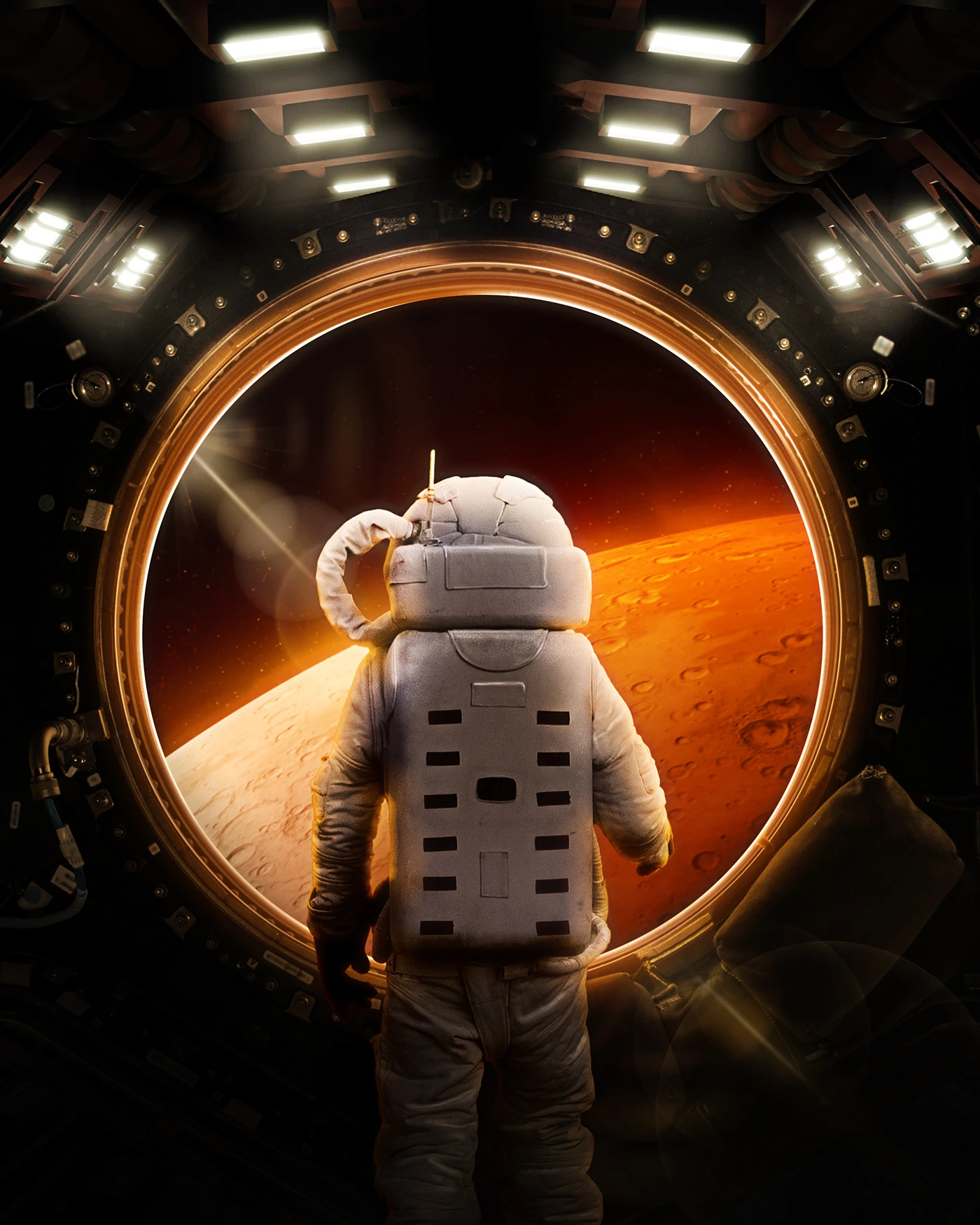
The closest distance between Earth and Mars is 54.6 million kilometers, their farthest distance is 401 million kilometers, and their average distance is 221 million kilometers.
But the second most important factor is technology. NASA’s fastest probe, Parker Solar Probe, broke its own speed records as it approached the Sun. The probe reached speeds of over 163 kilometers per second on November 21, 2021, which is equivalent to 586,000 kilometers per hour. According to estimates, when Parker Solar Probe approaches within 6.2 million kilometers of the Sun’s surface in December 2024, its speed will reach 692,000 kilometers per hour. Now, suppose we send such a probe from Earth to Mars, in this case it would take an average of 16 days to reach Mars.
Life on Mars
Rockets and spacecraft are powerful enough to send astronauts into deep space; but once astronauts reach Mars, life on the Red Planet can be much more difficult than the journey; but what should astronauts consider and what prerequisites should they look for to live on Mars?
Oxygen on Mars
Oxygen is the most basic need for humans to live on Mars, but it’s not as easy to get to on the Red Planet as it is on Earth. Unlike Earth’s air, which is 21 percent oxygen, the Martian atmosphere has less than 1 percent oxygen. That’s bad news. You can’t survive on Mars for more than a minute without oxygen.
Fortunately, pressurized suits that can circulate oxygen are available to astronauts; but how do we get this oxygen? Transporting it from Earth would be very expensive and impractical, but how do we get oxygen from Mars, which has a small amount of it? NASA is working on this problem with the Perseverance rover in a project called MOXIE. This project could provide a way to extract oxygen on Mars. In that case, one of the biggest challenges of space exploration would be solved.
